
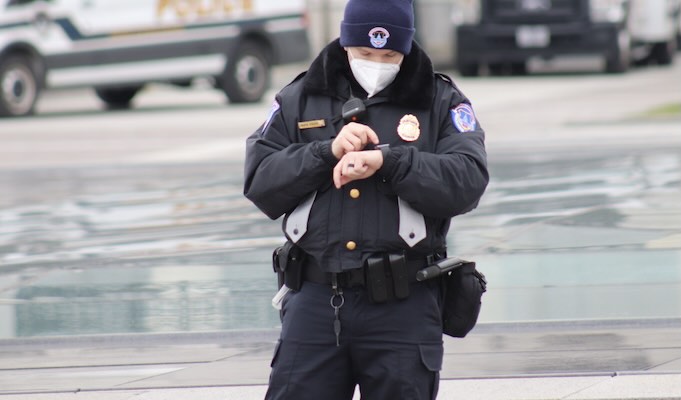
Smart Security in Healthcare: Enhancing Guard Services with Technology
By Frank Costa, President, Nexgen Protection Services
In healthcare, security isn’t just about protecting property—it’s about safeguarding patients, staff, and sensitive information. Technology is playing a growing role in elevating guard services across hospitals and medical facilities, offering smarter, faster, and more reliable protection.
Better Efficiency & Visibility
Tools like facial recognition, motion sensors, and AI-powered cameras help security guards monitor activity in real time—critical in high-traffic areas like ERs or visitor lobbies. These tools improve situational awareness and reduce manual tasks.
Improved Safety & Faster Response
Real-time alerts from surveillance and access control systems help security teams respond immediately to unauthorized access or suspicious behavior—essential in environments where seconds matter.
Secure Data & Compliance
Cloud-based storage ensures all security footage and access logs are safely stored, audit-ready, and protected against tampering—supporting HIPAA compliance and internal investigations.
Cost Savings & Focused Staffing
By automating routine tasks like badge checks or door monitoring, guard services can focus on higher-level responsibilities such as patient safety and emergency response, improving overall efficiency without increasing headcount.
Stronger Communication
Instant communication tools keep teams connected, ensuring coordinated responses during incidents or lockdowns—critical in healthcare settings with complex operations.
Conclusion:
Technology is not replacing healthcare security guard services teams—it’s making them more effective, responsive, and patient-focused. Smarter tools mean safer hospitals.
#HealthcareSecurity #HospitalSafety #SecurityTechnology #SmartHospitals #AccessControl #HIPAACompliance #HealthcareFacilities #SecurityInHealthcare #PatientSafety #EmergencyPreparedness #GuardServices #PhysicalSecurity
Source:
Smith,A. Integrate technology with security guard services for local businesses. (February 24, 2023) Security Magazine.
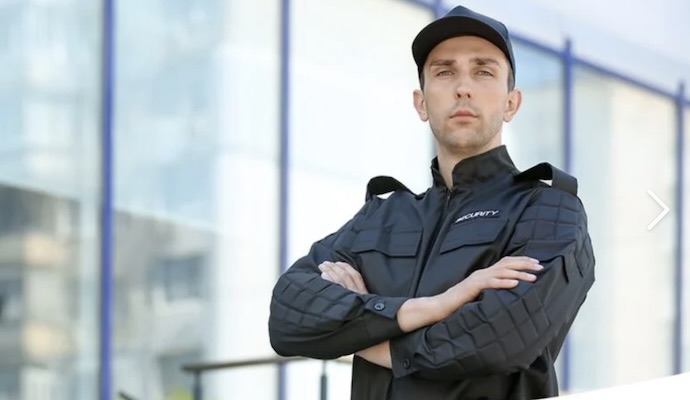
The Qualities That Define a Top-Tier Security Guard Professional
By Frank Costa, President, Nexgen Protection Services
What traits define a truly exceptional security guard—someone you’d trust with your safety or that of your loved ones? Far too often, the role is reduced to surface-level perceptions: a uniform, an authoritative presence, and perhaps a firearm. But real professional protection goes far beyond appearances and well beyond the minimum requirements for licensure.
Today’s security professionals must be equipped with a wide range of skills that blend emotional intelligence with physical readiness. Here are the core qualities that define a high-caliber security officer:
1. People Skills & Professionalism
At its heart, the job of a security officer—especially in protection and executive security—is often more like that of a concierge than a combatant. An effective officer must know how to communicate respectfully and clearly with people from all walks of life. They should integrate seamlessly with a client’s staff, liaise with law enforcement or other security personnel, and above all, build trust-based relationships that empower them to navigate logistical challenges smoothly. Whether it’s securing a table at a fully booked restaurant, gaining access to a private tarmac, or getting VIP parking in a secure location—relationships matter.
2. Critical Thinking & Decision-Making
Security is about anticipation and action. A seasoned professional plans for every potential scenario—and when things go sideways (as they often do), they adapt quickly. Split-second decisions under pressure can mean the difference between a controlled outcome and chaos. That kind of judgment only comes from training and experience, not instinct alone.
3. Observation Skills & Situational Awareness
A quality guard must constantly scan and interpret their environment—reading body language, spotting behavioral cues, and noticing irregularities before they escalate. Situational awareness isn’t just a tactical advantage; it’s a foundational skill that can prevent incidents before they start. This ability is sharpened over time but should begin with structured training, including case studies, scenario-based exercises, and video analysis of real-world incidents.
4. Knowledge of the Law
Understanding the law—especially in relation to use of force, citizen’s arrest, firearms, and search protocols—is non-negotiable. A professional security officer must operate within legal limits, not just to protect the client, but to protect themselves and their organization from liability.
5. Self-Defense Training
Ongoing self-defense training is essential. It’s not enough to be shown techniques once; they must be drilled, tested, and refined regularly. Physical skills fade without repetition, and in a high-risk encounter, the body only recalls what it’s been trained to do under pressure.
6. Firearms Proficiency
State-mandated firearms training for security officers often mirrors basic civilian carry courses—which are insufficient for professional-level readiness. True firearms competence requires advanced training, stress exposure, and scenario-based drills that simulate the realities of a live threat. Passing a paper target test isn’t enough.
7. Real-World Stress Experience
The first time a guard experiences an adrenaline spike shouldn’t be during an actual emergency. Effective training must include realistic, stress-inducing simulations to condition the body and mind to stay focused, make decisions, and take action under pressure. Without this, even the best classroom training risks falling apart in real life.
The Bottom Line:
A quality security guard isn’t just a visual deterrent—they’re a highly trained, emotionally intelligent, and physically prepared professional who can de-escalate conflict, protect people, and respond decisively in a crisis. The best officers aren’t just guarding—they’re thinking, adapting, and leading.
#SecurityProfessionals #ExecutiveProtection #SecurityTraining #MannedGuarding #SituationalAwareness #SecuritySkills #SecurityLeadership #ProtectionOfficer #PrivateSecurity #SecurityReadiness #UseOfForce #SecurityAwareness #CloseProtection #SecurityIndustry #SecurityStandards #ModernSecurity
Source:
By Jonathan McKee.Is Your Security Guard Good Enough? Why Many Protection Agents Need More Training. (May 26, 2020) Security Magazine.

The Evolving Role of Manned Guarding: Challenges and Opportunities
By Frank Costa, President, Nexgen Protection Services
The manned guarding sector continues to evolve, with private and in-house security officers increasingly being tasked with responsibilities that resemble those traditionally handled by police. In many areas, security guards—whether contracted through private firms or directly employed by local councils—are seen directing traffic, securing crime scenes, and preserving forensic evidence with professionalism and discipline on par with police officers.
This convergence of roles raises important questions: Why aren’t security officers, especially those licensed under the SIA (Security Industry Authority), more fully integrated into the public safety ecosystem? Why are they not routinely deployed in a more official capacity to relieve pressure on overstretched police forces?
One reason lies in institutional hesitation. Some police leaders remain reluctant to relinquish public-facing duties, seeing them as core to their mission and identity. This cultural resistance, combined with bureaucratic and operational hurdles, prevents a deeper partnership between the police and the private security sector.
Despite this, the work performed by security officers in public spaces is, in many cases, remarkably similar to that of sworn officers—and often just as courageous. Whether patrolling urban districts, responding to incidents, or maintaining order during large events, private security professionals are demonstrating the capability and commitment needed to support public safety efforts.
However, two persistent barriers continue to impede closer collaboration: vetting and communications. Unlike police officers, private security personnel often lack access to national vetting systems or secure communication networks (such as police radio channels). This gap undermines operational trust and coordination. At its core, it’s an issue of trust—between the state, the police, and the private security industry.
Until these structural issues are addressed, the full potential of security officers as an extended arm of public policing will remain unrealized. Nonetheless, the increasing reliance on private guards for frontline duties signals a shift in how public safety is being delivered —and it calls for a fresh conversation about the roles, recognition, and responsibilities of all uniformed protectors in society.
#MannedGuarding #PrivateSecurity #PublicSafety #SecurityIndustry #SIA #SecurityGuards #PolicePartnerships #UrbanSecurity #CommunitySafety #FrontlineSecurity #SecurityProfessionals #LawEnforcementSupport #SecuritySector #SecurityLeadership #TrustInSecurity #UKSecurity
Source:
Rowe, M. State of guarding: part one.(July2025) Professional Security Magazine