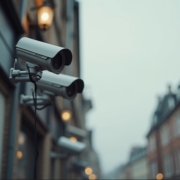

The ever-increasing threats from rising civil unrest and organized crime impact the manufacturing and industrial sector in a variety of ways. Our professionals work diligently to stay on top of these changes and develop strategic response procedures in order to minimize your potential risk and losses.

Rising Executive Risk: Why Protection Can No Longer Be Optional

Executive Risk: Protection Is No Longer Optional

Frank Costa, President, Nexgen Protection Services

A recent industry study highlights a striking shift in the threat landscape: up to 66% of U.S. tech-sector security leaders report an increase in threats of violence toward executives. As economic uncertainty and misinformation continue to fuel volatility, organizations are reassessing how they protect leadership, reputation, and long-term value.

In response, more companies and investors are turning to professional security protection teams.

Hiring a dedicated protection team goes beyond traditional security presence. It provides structured risk assessments, real-time threat monitoring, secure travel planning, and coordinated response protocols designed specifically for high-visibility individuals and their families. These teams are trained to identify emerging risks early—before they escalate into incidents that impact safety or operations.

Equally important, executive protection is now closely tied to business continuity. A disruption to leadership can quickly become a disruption to strategy, investor confidence, and organizational stability. Proactive security helps reduce that exposure.

In today’s environment, safeguarding executives is not just about personal safety—it is about protecting enterprise value.

Security is no longer reactive. It is strategic.

APA Source:
ASIS International. (2025). Executive protection and corporate risk trends report: Rising threats and duty of care in high-visibility sectors.

#ExecutiveProtection #CorporateSecurity #RiskManagement #LeadershipSafety #BusinessContinuity #ThreatIntelligence #SecurityStrategy #ReputationRisk #InvestorConfidence #CrisisManagement


Security-in-a-Challenging-Economy-From-Cost-Center-to-Critical-Investment

Security in a Challenging Economy: From Cost Center to Critical Investment

Security: a Critical Investment 

By Frank Costa, President, Nexgen Protection Services

In today’s challenging economy, prioritizing security isn’t optional—it’s essential. As theft, fraud, and opportunistic crime increase during periods of financial strain, organizations are realizing that proactive protection is a core part of operational resilience.

Hiring a professional security protection team is one of the most effective ways to strengthen that resilience.

Rather than relying on reactive measures after an incident occurs, protection teams focus on prevention. They identify vulnerabilities in physical spaces, monitor high-risk areas, and implement layered deterrence strategies that reduce the likelihood of theft and disruption in the first place.

In addition, trained security professionals provide rapid incident response when issues do arise—minimizing losses, protecting personnel, and preserving business continuity. Their presence also acts as a visible deterrent, which can significantly reduce opportunistic targeting.

In tighter economic conditions, the cost of not investing in security often outweighs the cost of prevention. Downtime, inventory loss, liability exposure, and reputational damage can have long-term financial consequences.

Strong security is not just about protection—it’s about stability, confidence, and continuity in uncertain times.

APA Source:
National Retail Federation. (2024). Retail security and loss prevention report: Trends in theft and proactive risk mitigation strategies.

#SecurityManagement #RiskManagement #LossPrevention #CorporateSecurity #BusinessContinuity #AssetProtection #TheftPrevention #SecurityStrategy #RetailSecurity #OperationalResilience


Real-Security-vs.-The-Illusion-of-Protection

Real Security versus the Illusion of Protection

Real Security versus the Illusion of Protection

By Frank Costa, President, Nexgen Protection Services

There is still a common misconception in the general public that security simply means “walking around and calling the police when something happens.” In reality, that approach reflects a limited, reactive model—not a true security strategy.

When security personnel are untrained, under-resourced, or not integrated into a broader risk framework, organizations may appear protected, but are often only experiencing the illusion of protection. Incidents are not prevented—they are merely reported after the fact.

It is important to recognize that this is often a systems problem, not an individual officer problem. Without proper training, clear protocols, intelligence support, and operational authority, even well-intentioned personnel are constrained in their ability to act effectively.

A professional security protection team changes this dynamic.

Modern protection teams are built around prevention, preparedness, and response capability. They are trained to assess risk in real time, de-escalate situations, coordinate emergency response, and integrate with law enforcement when necessary—rather than relying on it as the first and only option.

Organizations that invest in competent, structured security programs move from passive observation to active risk management. That shift is what creates real protection—not just the appearance of it.

Real security is not a uniform. It is a capability.

APA Source:
ASIS International. (2023). Security services standards: Professional competencies and effective incident response in private security operations.

#SecurityManagement #RiskManagement #CorporateSecurity #ExecutiveProtection #LossPrevention #SecurityStrategy #CrisisResponse #WorkplaceSafety #ProfessionalSecurity #BusinessContinuity


When-Every-Camera-Becomes-a-Battlefield-Sensor.

Security Cameras are Battlefield Sensors

Security Cameras are Battlefield Sensors

By Frank Costa, President, Nexgen Protection Services

Security cameras were once seen as passive tools for safety and deterrence. Today, they are increasingly part of a much larger—and more complex—global security picture.

Reports from modern conflict zones show how unsecured surveillance systems, including street and infrastructure cameras, can be exploited to gain real-time visibility into environments. In some cases, these feeds have been used to support targeting decisions, assess operational outcomes, and inform follow-on actions. The implication is clear: connected devices can become intelligence assets—whether intended or not.

This reality highlights why hiring a professional security protection team is no longer optional for high-risk environments.

A modern protection team doesn’t just “monitor cameras.” They secure the entire ecosystem—ensuring surveillance systems are properly configured, access-controlled, encrypted, and continuously assessed for vulnerabilities. They also integrate physical security operations with cyber hygiene practices to reduce the risk of external exploitation.

Beyond technology, trained security professionals bring critical judgment. They can identify suspicious network behavior, respond to potential compromises, and coordinate with technical and operational stakeholders in real time.

In today’s environment, security is no longer just about visibility—it’s about control, integrity, and resilience across both physical and digital domains.

APA Source:
U.S. Department of Defense. (2024). Emerging threats in contested environments: Surveillance systems, cyber exploitation, and operational security risks.

#CyberSecurity #PhysicalSecurity #RiskManagement #SurveillanceSecurity #ExecutiveProtection #CriticalInfrastructure #ThreatIntelligence #SecurityStrategy #DefenseInnovation #OperationalSecurity


Staying-Ahead-of-Risk-in-an-Era-of-Uncertainty

Staying Ahead of Risk in an Era of Uncertainty

Risk in an Era of Uncertainty

By Frank Costa, President, Nexgen Protection Services

Uncertainty and instability now define the world. Security leaders respond by focusing on one clear priority: getting ahead of evolving threats. From emerging threat actors and extremism to growing concerns around team safety and well-being, the message was consistent—reactive security is no longer enough.

This is where hiring a professional security protection team delivers measurable value.

Modern protection teams are built to anticipate risk, not just respond to it. They continuously monitor threat landscapes, analyze intelligence on emerging actors, and translate that insight into practical protection strategies. This proactive posture helps organizations reduce exposure before incidents occur.

Equally important is the focus on personnel well-being. Security professionals are increasingly recognizing that resilience isn’t just about protecting assets—it’s about protecting people. Structured protection teams provide operational support, fatigue management considerations, and safer working environments for those on the front lines.

By integrating intelligence, on-the-ground protection, and risk management, these teams help organizations stay ahead of instability rather than react to it.

In a volatile environment, preparedness is not optional—it is a competitive and operational advantage.

APA Source:
ASIS International. (2025). Global security trends report: Emerging threats, extremism, and duty of care for security teams.

#SecurityManagement #RiskManagement #ThreatIntelligence #CorporateSecurity #ExecutiveProtection #WorkplaceSafety #CrisisPreparedness #SecurityStrategy #DutyOfCare #BusinessContinuity


Cyber-Physical-Security-Must-Be-Integrated

Cyber & Physical Security Must Be Integrated — Not Optional

Cyber & Physical Security Must Be Integrated

By Frank Costa, President, Nexgen Protection Services

Security threats no longer fit neatly into “cyber” or “physical” categories. They are converging—and organizations that fail to integrate both domains are increasingly exposed.

Recent warnings tied to the 2026 global event cycle highlight this shift. Reports of attempted cyber disruptions against high-profile international event infrastructure underscore how digital attacks can directly impact physical operations, logistics, and public safety. At the same time, the Cybersecurity and Infrastructure Security Agency (CISA) has urged organizations to replace end-of-life network and IoT devices, noting that unsupported systems are actively being targeted by attackers.

This is where hiring a modern security protection team becomes essential.

Integrated teams bridge the gap between cyber and physical security by combining threat intelligence, on-the-ground protection, and technical risk management. They recognize that vulnerabilities in outdated devices can translate into real-world access risks, and that physical environments—venues, facilities, personnel—are often entry points for broader digital compromise.

A unified security approach enables:
• Faster identification of cross-domain threats
• Stronger incident response coordination
• Reduced risk from outdated or unmonitored systems
• Improved resilience for events, infrastructure, and operations

In today’s environment, siloed security is a liability. Integration is the standard for resilience.

APA Source:
Cybersecurity and Infrastructure Security Agency. (2026). Advisory on end-of-life network and IoT device vulnerabilities and risk mitigation guidance.

#CyberSecurity #PhysicalSecurity #IntegratedSecurity #RiskManagement #ThreatIntelligence #CISA #CriticalInfrastructure #ExecutiveProtection #SecurityStrategy #BusinessContinuity


Beyond-the-Perimeter-The-New-Standard-for-Securing-High-Visibility-Events

Beyond the Perimeter: The New Standard for Securing High-Visibility Events

Securing High-Visibility Events

By Frank Costa, President, Nexgen Protection Services

Securing large-scale, high-visibility events requires more than perimeter control—it demands intelligence-driven, proactive strategies that identify threats before they materialize.

Hiring a professional security protection team is critical to meeting this challenge.

Modern teams integrate protective intelligence, investigations, and real-time threat analysis to shift from reactive response to proactive prevention. By leveraging open-source intelligence (OSINT), behavioral analysis, and advanced data tools, they can detect early warning signs and intervene before risks escalate.

Equally important is coordination. Effective protection teams facilitate information sharing across agencies, ensuring unified situational awareness and faster decision-making in dynamic environments. They understand that threats often develop long before reaching the venue—making early detection essential.

The result is stronger risk mitigation, improved safety, and greater confidence for stakeholders and attendees alike.

In today’s environment, security isn’t just about response—it’s about anticipation.

APA Source:
U.S. Department of Homeland Security. (2023). National Special Security Events: Enhancing protective intelligence and interagency coordination.

#EventSecurity #ProtectiveIntelligence #RiskManagement #NationalSecurity #CorporateSecurity #ThreatAssessment #OSINT #CrisisManagement #PublicPrivatePartnerships #SecurityStrategy


Integrated-Security-The-Future-of-Protection.

Integrated Security: The Future of Protection

Integrated Security.

By Frank Costa, President, Nexgen Protection Services

The U.S. security services market—is undergoing a major transformation. The integration of physical protection, investigations, and cyber defense is no longer optional; it’s the new standard for organizations facing complex, multi-layered threats.

Hiring a professional security protection team is at the center of this shift.

Modern protection teams don’t operate in silos. They connect physical security with investigative intelligence and cybersecurity awareness, creating a unified strategy that identifies risks earlier and responds more effectively. Whether it’s detecting suspicious behavior on-site, uncovering fraud through investigations, or mitigating cyber-related vulnerabilities, integration leads to stronger outcomes.

This approach also improves efficiency and accountability. Instead of fragmented vendors and delayed communication, organizations benefit from a coordinated team that shares intelligence in real time and adapts quickly to evolving threats.

Most importantly, integrated security protects more than assets—it safeguards reputation, leadership, and business continuity.

As threats become more sophisticated, so must the response. Organizations that invest in integrated security teams position themselves to stay ahead, not react behind.

APA Source:
IBISWorld. (2024). Security services industry in the US: Market size and integrated security trends.

#IntegratedSecurity #CorporateSecurity #CyberSecurity #RiskManagement #ExecutiveProtection #BusinessContinuity #SecurityStrategy #ThreatIntelligence #PhysicalSecurity #Innovation


Redefining-Security-Moving-Beyond-Traditional-Guarding-Models

Redefining Security: Moving Beyond Traditional Guarding Models

Redefining Security.

By Frank Costa, President, Nexgen Protection Services

Today’s security challenges demand more than a static guarding presence. Organizations are shifting toward modern, technology-driven approaches that prioritize transparency, adaptability, and measurable outcomes.

Hiring a professional security protection team is central to this evolution.

Unlike traditional models, modern security teams integrate advanced technologies—such as real-time monitoring systems, data analytics, and mobile reporting tools—with highly trained personnel. This combination provides clients with greater visibility into operations, faster response times, and actionable insights rather than reactive reporting.

Transparency is a key differentiator. Clients gain access to clear communication, detailed incident reporting, and performance metrics that demonstrate value. At the same time, adaptable security teams can quickly adjust strategies based on emerging risks, changing environments, or client needs.

The result? Better outcomes. Reduced incidents, improved safety, and stronger alignment between security operations and business objectives.

Security is no longer just about presence—it’s about performance, intelligence, and trust.

APA Source:
ASIS International. (2023). Transforming physical security: Integrating technology and personnel for enhanced outcomes.

#SecurityInnovation #CorporateSecurity #RiskManagement #SecurityStrategy #PhysicalSecurity #BusinessContinuity #TechDriven #SecurityLeadership #Transparency #ClientSuccess

Faster-Decisions-Stronger Security

Closing the Gap: Faster Decisions, Stronger Security

Faster Decisions, Stronger Security.

By Frank Costa, President, Nexgen Protection Services

The biggest delays in security response don’t happen at detection—they happen between the alert and the decision. In high-stakes situations, seconds matter. The ability to assess, decide, and act quickly can mean the difference between prevention and loss.

This is where hiring a professional security protection team delivers real value.

Trained teams are equipped to interpret alerts in real time, cut through noise, and make informed decisions under pressure. They combine experience, situational awareness, and established protocols to reduce hesitation and accelerate response. Instead of relying solely on automated systems or fragmented communication, organizations benefit from a coordinated, human-led approach.

A dedicated security team also strengthens preparedness. Through advance planning, scenario training, and continuous risk assessment, they minimize uncertainty when incidents occur. This leads to faster, more confident decision-making and improved outcomes across the board.

Technology can detect threats—but people decide how to respond. Bridging that gap is what turns security from reactive to proactive.

APA Source:
ASIS International. (2022). Security risk management: Reducing response time through trained personnel and integrated systems.

#SecurityStrategy #RiskManagement #CorporateSecurity #CrisisResponse #ExecutiveProtection #DecisionMaking #BusinessContinuity #ThreatAssessment #PhysicalSecurity #SecurityLeadership