Posts

Retailers Must Leverage Technology That Goes Beyond Thwarting Theft to Predicting It

Retailers Must Leverage Technology That Goes Beyond Thwarting Theft to Predicting It

Frank Costa, President, Nexgen Protection Services

Violence remains a major concern for the retail industry. Retailers and solution providers must collaborate to develop and implement technology that goes beyond simply thwarting theft. Efforts must focus on predicting and preventing theft. By doing so will proactively reduce the risk of violence and mitigate crime.

Retailers have reported an increase in both the average number of shoplifting incidents and the amount of dollars lost due to shoplifting over the past year (National Retail Federation, The Impact of Retail Theft & Violence 2024).

Protecting store associates and customers, while reducing today’s levels of violence and retail crime, requires a whole-community approach and collaboration across all stakeholders.

SOURCE: 

Wolfe, C. New Study Shows Shoplifting Is Up 93% Since Before the COVID-19 Pandemic, Loss Prevention Magazine, 12/19/2024.
#protectionservices #securitystandards #publicsaftey  #mobilesecurity #securitythreats


Creating a Loss Prevention Culture: A Thoughtful, Strategic Approach

Creating a Loss Prevention Culture: A Thoughtful, Strategic Approach

Frank Costa, President, Nexgen Protection Services

Set Up a Loss Prevention/Asset Protection Team

Creating a loss prevention culture requires a thoughtful, strategic approach. Here are four key steps to establish a cohesive and proactive loss prevention framework:

1. Define Your Mission and Scope

The first step in fostering an effective loss prevention culture is to clarify its focus, goals, and priorities. This involves defining the specific areas your company’s loss prevention efforts will address, such as waste management, operational inefficiencies, and workplace safety.

Equally important is determining how the success of your loss prevention culture will be measured. Beyond traditional metrics like shrink reduction, consider tracking waste, gross margin, accident frequency rate (AFR), safety compliance, and other indicators that align with your business objectives.

Establishing these foundational elements helps shape the structure of your loss prevention efforts, guiding leadership, field management, and store-level teams.

2. Assemble a Dynamic Team

A successful loss prevention culture thrives on a team with diverse skill sets. You need a mix of traditional loss prevention expertise and operational knowledge to effectively combat evolving tactics in organized retail crime and other complex loss events. This means having team members skilled in investigations as well as those with deep knowledge of business operations.

Building a robust loss prevention culture is about more than preventing theft; it’s about understanding how every facet of your business contributes to loss. A diverse team ensures you’re prepared to tackle challenges from multiple angles.

3. Foster a Unified Loss Prevention Environment

Building a true loss prevention culture requires teamwork and collaboration. Strong interdepartmental relationships and clear policies are essential for effective decision-making and risk mitigation. These policies provide employees with a framework to minimize errors, ensure proper data handling, and enforce compliance.

By collaborating with sales, operations, and other departments, loss prevention becomes seamlessly integrated into the business culture.

4. Leverage Technology for Scalable Growth

Investing in technology can significantly strengthen your loss prevention culture. While the initial costs may seem high, tools like incident management software and audit platforms with workflow automation can handle increased workloads without proportional increases in costs, making them ideal for scalable growth.

SOURCE: 

Wolfe, C. Why Human Resources and Loss Prevention Should Train Together, Loss Prevention Magazine, 12/20/2024.
#protectionservices #securitystandards #publicsaftey  #mobilesecurity #securitythreats

 

Building Agile Security Strategies Adaptable to the Rapidly Changing Landscape

Building Agile Security Strategies Adaptable to the Rapidly Changing Landscape

Frank Costa, President, Nexgen Protection Services

The future of network security is both exciting and challenging. Organizations must stay ahead of emerging trends by building agile security strategies that are adaptable to the rapidly evolving threat landscape.

Retailers, in particular, must demonstrate daily flexibility to protect their workers, meet sales goals, and attract customers—all while maintaining safe and efficient operations. Retail is a complex web of interconnected elements.

To stay competitive, organizations need technology that is “future-proof”—capable of meeting shifting consumer demands, ensuring operational efficiency, and safeguarding against potential security threats, both internally and externally.

Cybercriminals are increasingly leveraging a combination of tactics, techniques, and procedures (TTPs), targeting multiple areas at once to breach defenses. We can expect an increase in the sophistication and evasion tactics of web-based attacks, file-based attacks, DNS-based attacks, and ransomware, making it more difficult for traditional, siloed security tools to effectively defend against modern threats.

Preventing these attacks will require multiple security services working together as part of an integrated platform to stop every attack along the cyber kill chain.


SOURCE: 

Davidson, B. Cutting Retail Losses, Security Today, 11/13/2024.
#protectionservices #securitystandards #publicsaftey  #mobilesecurity #securitythreats

 

Do’s and Don’ts of GenAI for Security Metrics

Do’s and Don’ts of GenAI for Security Metrics

Frank Costa, President, Nexgen Protection Services


Security teams must get it right—there’s no room for error.

Do you use ChatGPT or other AI generators for your business security? Regardless of how you implement GenAI, what truly matters is what you do—and don’t do.

There’s no doubt that GenAI models are powerful tools. When adopted responsibly, they can help streamline security protocols, optimize time, and more. However, it’s crucial to remain fully aware of the limitations of GenAI models.

For starters, never underestimate the importance of keeping the human touch in your work. As smart as AI might seem, it cannot capture the intangibles that come from human intuition.

AI lacks a sense of bias and is unaware of what constitutes correct or incorrect facts. Therefore, it is vital to proofread any AI-generated content and verify all facts before acting on the data.

GenAI models are trained on vast amounts of data from multiple sources, meaning there is always a risk that AI-generated content could contain plagiarized text.


SOURCE: 

Shelmire, A. Liars in the wires: Getting the most from GenAI without getting duped, Security Magazine, 09/19/2024.
#protectionservices #securitystandards #publicsaftey  #mobilesecurity #securitythreats
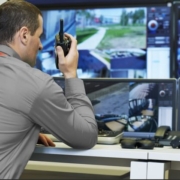
 

Aligning your metrics to key security processes within the organization is what’s really important. The challenge is to measure the right things.

Understand What Security Processes Are Essential For The Business To Succeed

Frank Costa, President Nexgen Protection Services – 

Aligning your metrics to key security processes within the organization is what’s really important.  The challenge is to measure the right things.

Security managers need to speak to senior leaders in familiar business language, offering measurable results that correlate with investment. Without compelling metrics, security managers and their budgets rely largely on the intuition of company leadership.

Experts agree, saying what’s important isn’t just about the numbers used but how those measures highlight that business story while solving problems to further business goals.


SOURCE: 

Randolph, C. Metrics that matter: How security professionals can show value, Security Magazine, 11/05/2024.
#protectionservices #securitystandards #publicsaftey  #mobilesecurity #securitythreats

 

Organizations Must Be Ready to Assess Potential Security Risks to Protect Everyone

Organizations Must Be Ready to Assess Potential Security Risks to Protect Everyone

Frank Costa, President Nexgen Protection Services – 

Security leaders across environments — spanning retail stores, corporate businesses, residential communities and cities — should prepare for threats that will require fast and informed action. We all have experienced major cultural moments, including the 2020 election, COVID-19 pandemic, and nationwide protests. 

It is critical for organizations to put in place security protocols to preserve employee and public safety while respecting the rights of citizens.  Creating a plan and protocols to address these incidents will help you ensure a coordinated response.

  • Establish communication protocols. Create clear communication protocols that explain how information will flow to key parties, such as store or business leadership, employees, customers, neighboring businesses and law enforcement.

  • Assess physical defense measures. How can you protect your building from damage or control the flow of traffic and people?

  • Promote de-escalation tactics. Reinforce your communication protocols during this training. Ensure that the safety of every employee and customer is the number one priority, reminding them to not get involved if physical violence occurs.

  • Implement safety technology. Cameras, alarms, motion detectors, and motion-triggered lights can all bring visibility to situations, add necessary deterrence if you make the decision to close a location, and gather evidence to help law enforcement pursue bad actors. Revisit your existing security investments to assess their capabilities, and consider whether you need new solutions to cover your gaps.   


SOURCE: 

Kelley, M. 3 potential security risks to stay ahead of post-election, Security Magazine, 11/20/2024.
#protectionservices #securitystandards #publicsaftey  #mobilesecurity #securitythreats

 

Why Local Businesses Should Build Strong Relationships with Law Enforcement

Why Local Businesses Should Build Strong Relationships with Law Enforcement

Frank Costa, President Nexgen Protection Services – 

Building strong relationships with law enforcement has always been crucial to a successful loss prevention program. Historically, the relationship between retail stores and local law enforcement has been a part of both community safety and retail performance, reinforcing the critical elements of security and well-being.

Trust and respect are essential, along with a general understanding of how we can work together to keep our communities safe and our businesses successful.

SOURCE: 

Brittain, J. Fostering Next-Level Partnerships That Make a Difference, Loss Prevention Magazine, 11/20/2024.
#protectionservices #securitystandards #publicsaftey  #mobilesecurity #securitythreats
 

Cargo Theft is Real and You Need to Protect Your Assets

Cargo Theft is Real and You Need to Protect Your Assets

Frank Costa, President Nexgen Protection Services – 

A new form of theft has developed – strategic cargo theft. Strategic cargo theft is defined as deceiving a party at various points within the supply chain to hand over their freight to thieves. This form of theft involves the manipulation of data, paperwork, and identities from a distance to gain access to freight under false pretenses.

Use dedicated, asset-based carriers to move your freight. An asset-based carrier is a company that owns its trucks and hires its own drivers. This allows you to clearly vet the company you will be doing business with.

Insist on placing disposable GPS trackers inside your high-value loads. These cost-effective devices eliminate reverse logistics and device management while providing complete visibility of your freight, in real-time, from anywhere around the world. 


SOURCE: 

Tabor, J. Strategic Cargo Theft: What It Is, How It Started, and What You Can Do to Stop It, Loss Prevention Magazine, 12/2/2024.
#protectionservices #securitystandards #publicsaftey  #mobilesecurity #securitythreats
 

Artificial intelligence and Machine Learning are Game Changers

Artificial intelligence and Machine Learning are Game Changers

Frank Costa, President Nexgen Protection Services – 

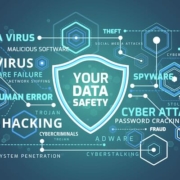
Artificial intelligence (AI) and machine learning (ML) are no longer just buzzwords; they’re reshaping the very fabric of how we protect our spaces, assets, and people. These smart systems are not just observing – they’re thinking, predicting and enabling security professionals to do more with less.

AI and ML allow security departments to extend their reach and effectiveness without necessarily expanding their workforce. 

  • Automated Monitoring: AI can continuously monitor multiple video feeds from one to dozens or many hundreds of cameras, flagging only the events that require human attention.
  • Intelligent Dispatching: ML algorithms can analyze incidents, learn from the patterns, and automatically dispatch the most appropriate response.
  • Predictive Maintenance: AI can monitor the health of security equipment, predicting failures before they occur, helping reduce downtime.

These capabilities don’t just save time; they fundamentally change how security teams operate, allowing them to be more strategic and proactive in their approach.


SOURCE: 

Carder, H. Smart systems usher in a new era of proactive physical security, Loss Prevention Magazine, 10/22/2024.
#protectionservices #securitystandards #publicsaftey  #mobilesecurity #securitythreats

 

License Plate Recognition (LPR): Secure, Intelligence Led Approach Retail Protection

License Plate Recognition (LPR): Secure, Intelligence Led Approach Retail Protection

Frank Costa, President Nexgen Protection Services – 

Retailers are increasingly focused on establishing additional layers of control – so it makes sense why License Plate Recognition (LPR) is becoming a common talking point when it comes to LP strategies.

The scope of loss prevention has expanded to human safety first and foremost. This shift is matching the rise of Organized Retail Crime and violence in stores.

LPR systems use high-resolution cameras and other systems to capture and convert images of license plates into alphanumeric text, which can then be cross-referenced. Retailers worldwide have adopted LPR (sometimes known as ANPR) increasingly as an important component of their security strategies.


SOURCE: 

Elevating Retail Security Integrating License Plate Recognition and

Audio Detection into Your Safety Strategy, Loss Prevention Magazine, 12/10/2023.
#protectionservices #securitystandards #publicsaftey  #mobilesecurity #securitythreats