Posts

The ROI of Security: Preventing Breaches Leads to Profit and Trust

The ROI of Security: Preventing Breaches Leads to Profit and Trust

By Frank Costa, President, Nexgen Protection Services

There are several ways to quantify security ROI, including cost savings from prevented breaches, regulatory compliance, and enhanced business continuity.

At its core, ROI is a financial metric that evaluates the profitability of an investment. In the context of security, ROI refers to the financial benefits gained from investing in security measures relative to the costs incurred. Calculating ROI can be complex in this context due to the intangible nature of many security benefits, such as risk mitigation and enhanced reputation.

Consumers are increasingly concerned about the security of their personal information. Businesses that prioritize security not only differentiate themselves from competitors but also build trust with customers. A strong security posture demonstrates a company’s commitment to protecting customer data, enhancing brand loyalty and attracting new customers.


Wood CPP, P. (March 17, 2025). How to Measure Your Security and Resilience ROI. Security Management.

Hashtags:
#ProtectionServices #SecurityStandards #PublicSafety #MobileSecurity #SecurityThreats


A Deep Dive Into the Landscape of Gun-Related Incidents Across the United States

A Deep Dive Into the Landscape of Gun-Related Incidents Across the United States

By Frank Costa, President, Nexgen Protection Services

While active shooter events—where individuals enter a space with the intent to kill—are relatively rare, the most common gun-related incidents are often the result of personal disputes that escalate into violence. Other frequent incidents include weapons being discovered but not used, as well as shooting threats.

Two of the most powerful predictors of gun violence are:

  1. History of Aggression
    Individuals with a history of aggressive behavior are more likely to engage in violent acts. Prior incidents of aggression should be closely monitored to assess potential risks.
  2. Substance Abuse
    Substance abuse, particularly involving alcohol and drugs, has a strong correlation with violent behavior. This factor should be considered when assessing threats.

GUN RELATED INCIDENTS

In many cases, retailers may not own the parking lot or outdoor spaces surrounding their stores. However, they can still enhance security by installing exterior cameras that monitor these areas. Additionally, considering the placement of in-store cameras, integrating gun detection software into existing security systems, and providing specialized training for security personnel can further improve safety measures.

Source:
Wolfe, C. (February 13, 2025). Retail Spaces Top the List of Gun Violence Targets in New Report. Loss Prevention Magazine.

Hashtags:
#ProtectionServices #SecurityStandards #PublicSafety #MobileSecurity #SecurityThreats


Advanced Loss Prevention Strategies: Addressing Staff Morale Issues

Advanced Loss Prevention Strategies: Addressing Staff Morale Issues

By Frank Costa, President, Nexgen Protection Services

Is your organization struggling with low staff morale? Here are a few telltale signs to watch for:

  1. Absenteeism and Presenteeism
    Low morale often leads to employees either frequently missing work (absenteeism) or coming to work but not fully engaging (presenteeism).
  2. Frequent Conflicts
    While conflict is natural in any workplace, constant or unresolved disputes may signal deeper morale issues.
  3. Disorganization
    Employees who feel disengaged may lack the motivation to maintain a tidy and organized work environment.
  4. Ongoing Complaints
    Regular complaints, especially about minor issues, may indicate dissatisfaction with the overall work culture.
  5. Customer or Client Complaints
    Low employee morale often affects customer service, leading to more frequent complaints about work quality, employee attitudes, or service.

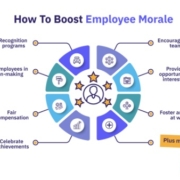
Managers play a crucial role in shaping employees’ attitudes toward their jobs. Management training programs that focus on effective communication, fostering psychological safety, and recognizing employee achievements can significantly improve job satisfaction, morale, and overall team loyalty.

Source:
Wolfe, C. (February 26, 2025). How to Maintain Employee Morale While Fulfilling Your Responsibilities. Loss Prevention Magazine.

Hashtags:
#ProtectionServices #SecurityStandards #PublicSafety #MobileSecurity #SecurityThreats


Phishing Threats Are on the Rise: Organizations Must Assess Their Vulnerability

Frank Costa, President of NEXGEN Protection Services on Phishing Threats:

As AI-powered tools become more accessible, phishing threats are aon the rise. Attackers are increasingly targeting multiple channels to bypass security measures, beginning with phishing emails that contain links to video meetings featuring a deep fake.

Phishing attacks are becoming increasingly sophisticated, making it essential for organizations to assess their vulnerability. Hackers now have access to advanced AI-powered tools that enable them to craft email messages, create malicious payloads, and even generate deep fakes. These technologies—and the cyberattacks they facilitate—are more accessible than ever, particularly as cybercriminals tap into the growing “Crime as a Service” (CaaS) ecosystem. Providers now sell everything from attack tools to pre-packaged phishing kits designed to bypass native defenses and secure email gateways (SEGs).

Threat actors can leverage AI at every stage of a phishing attack, from speeding up the intelligence-gathering process on potential targets to automating the creation and distribution of highly personalized attacks. The use of AI accelerates and scales up attack creation, allowing even less-experienced cybercriminals to launch sophisticated campaigns. 

Impersonation attacks are another common tactic. The most frequent form involves attackers posing as the recipient’s company, accounting for 16% of phishing emails. The Human Resources (HR) department is often impersonated in these attacks. Cybercriminals also use platforms like LinkedIn, company websites, and news announcements to identify new hires at target organizations. These newly hired employees are then targeted in impersonation and social engineering attacks. New employees are frequently the victims of phishing emails impersonating VIPs, particularly in CEO fraud schemes.

To strengthen defenses, organizations can adopt best practices that help build a “human firewall.” The first step is to understand and communicate what constitutes normal behavior for brands and suppliers, which can aid in detecting impersonation. Organizations should also standardize and validate communication channels, especially for roles like HR and IT. Finally, companies should assess their vulnerability to supply chain and vendor-based compromises.

Source:
Alger, J. (February 20, 2025). Mobile Phishing Threats Are Evolving, According to New Research. Security Magazine.

 

Loss Prevention Strategies

Loss Prevention Strategies for Combating Organized Retail Theft

Frank Costa, President of NEXGEN Protections Services on Loss Preventions Strategies:

Organized retail theft (ORT) impacts more than just a retailer’s bottom line; it creates dangerous environments for both staff and shoppers. The increasing incidents of violence and aggression have pushed retailers to invest heavily in loss prevention strategies. In response, major retailers are partnering with technology innovators to strengthen their defenses. 

(ORT) involves coordinated efforts by professional thieves to steal large quantities of merchandise from retail stores. Unlike casual shoplifting, ORT is systematic, with stolen goods often resold through various channels, including online marketplaces. This form of theft has seen a significant rise in recent years, resulting in billions of dollars in annual losses for retailers.

Companies such as Walmart, Target, Lowe’s, Kroger, Macy’s, CVS, and others are at the forefront, using cutting-edge technology to deter and detect criminal activity. From advanced video surveillance systems to biometric cameras and autonomous security robots, retailers are deploying a formidable arsenal to combat the growing threat of ORT. Central to this technological revolution is the integration of artificial intelligence (AI), which enhances the sophistication and effectiveness of existing security measures.

Source:
Danielson, R. (February 20, 2025). Retail Resilience: Technology Strategies to Combat Organized Theft. Security Magazine.
Hashtags: #protectionservices #securitystandards #publicsafety #mobilesecurity #securitythreats


Terrorist-Organizations

The Trump Administration Designates Several Cartels as Terrorist Organizations

Frank Costa, President of NEXGEN Protection Services on Terrorist Organizations:

The Trump administration designated eight Latin American cartels as terrorist organizations on Thursday, a designation typically reserved for groups with political goals achieved through violence.

The U.S. Department of State filed the notice of the designation in The Federal Register on February 20. The action targets the following cartels:

  • Cartel del Golfo (CDG), also known as the Gulf Cartel and the Osiel Cárdenas-Guillén Organization
  • Cartel del Noreste (CDN), also known as the Northeast Cartel and Los Zetas
  • Cartel de Jalisco Nueva Generación (CJNG), also known as the Jalisco New Generation Cartel
  • Cartel de Sinaloa, also known as the Sinaloa Cartel, the Mexican Federation, and the Guadalajara Cartel
  • Carteles Unidos, also known as United Cartels, Tepalcatepec Cartel, Cartel de Tepalcatepec, the Grandfather Cartel, Cartel del Abuelo, and Cartel de Los Reyes
  • La Nueva Familia Michoacana (LNFM)
  • Mara Salvatrucha (MS-13)
  • Tren de Aragua (Aragua Train)

The eight cartels’ members are described as “foreign persons who have committed or attempted to commit, pose a significant risk of committing, or have participated in training to commit acts of terrorism that threaten the security of U.S. nationals or the national security, foreign policy, or economy of the United States,” according to the State Department filing.

Source:
Gates, M. (February 20, 2025). United States Designates 8 Cartels as Terrorist Organizations. Security Management Magazine.


Security Protection

Executive Security Protection: Risks, Extremist Influencers, Shifting Tactics

Frank Costa, President of NEXGEN Protection Services on Security Protection:

Concerns about executive safety remain high. Not only was UnitedHealthcare CEO Brian Thompson tragically killed in December 2024, but there have also been multiple other incidents involving threats against business executives. Additionally, social media influencers and other sources have incited calls for similar attacks.

High-level executives without an executive security protection (EP) team are increasingly vulnerable to becoming targets.

The heightened emotional climate surrounding politics and public figures has made executive protection more challenging—and more essential. Politically motivated threats were notably higher in 2024. More than 50 members of Congress were victims of swatting attacks, and 700 members had faced threats the previous month. (Many threats were not publicly reported, so they are not included in TorchStone’s official threat count.)

Tactics are also evolving. Threat incidents are now categorized as verbal or written threats, harassment, stalking, physical attacks, and other crimes, which may include financially motivated offenses such as robberies, home invasions, and property crimes.

Source:
Gates, M. (February 5, 2025). EP Trends: Residential Risks, Extremist Influencers, Shifting Tactics. Security Management Magazine.


Fraud-Detection-with-Video-Surveillance-Analytics.

Ways to Boost Fraud Detection with Video Surveillance & Analytics

Frank Costa, President of NEXGEN Protections Services on Fraud Detection:

Fraud costs the financial sector billions of dollars each year. It’s a persistent challenge for banks globally, made more complex by increasingly sophisticated fraud tactics and methods.

To stay ahead of fraud, financial institutions must leverage every available tool to protect their customers and assets. One such tool is video surveillance and analytics. By integrating video technology with fraud detection systems, banks can gain real-time insights, spot patterns, and take a proactive approach to security. This not only helps detect fraud but also prevents it from escalating.

  1. Real-Time Fraud Alerts
    Fraud detection systems generate a massive amount of data, but not every alert indicates a genuine threat. Video surveillance adds a critical visual layer, helping differentiate between legitimate fraud and false alarms.
  2. License Plate Recognition
    Drive-up ATMs and tellers face unique security challenges, especially in suburban and rural areas. License Plate Recognition (LPR) technology, integrated with video systems, offers a powerful way to identify vehicles linked to fraudulent activities. This information can be used to flag repeat offenders or known fraudsters.
  3. Behavioral Analytics
    ATM skimming is one of the most persistent threats to banks. Video surveillance equipped with behavioral analytics can identify suspicious patterns, such as individuals loitering near ATMs without conducting transactions or using multiple cards in quick succession.
  4. Integrated Surveillance
    ATM jackpotting—where criminals manipulate ATMs to dispense large amounts of cash—is a growing global issue. Combining video surveillance with physical sensors offers an effective defense. Cameras can detect unusual activity, like tampering, suspicious vehicles parked near ATMs, or vehicles with no license plates, and trigger real-time alerts.
  5. Loitering Detection
    Ensuring customer safety, especially at ATMs after hours, is a top priority for banks. Video surveillance with loitering detection analytics can identify individuals lingering near ATMs for extended periods, enabling timely intervention.
  6. Video Storage with Hybrid Solutions
    Storing surveillance footage for extended periods can be expensive. Hybrid storage solutions, which combine on-premises and cloud-based video storage, offer a practical alternative. Banks can securely store critical footage without the need for large-scale on-site infrastructure.
  7. Camera-to-Cloud Solutions for Remote Monitoring
    In some areas, installing on-site recorders can be impractical due to space or connectivity issues. Camera-to-cloud solutions address this by streaming video directly to the cloud. This eliminates the need for on-site hardware while maintaining full surveillance capabilities.
  8. Disaster Preparedness for Video Data
    Natural disasters pose a significant challenge to video surveillance systems. To mitigate this risk, banks should ensure that critical footage is preserved, even when on-site systems are compromised. Centralized evidence archiving allows banks to offload important video data to secure locations before a disaster strikes.

Transforming Fraud Prevention with Video Analytics

Video surveillance and analytics are revolutionizing fraud prevention, equipping banks with powerful tools to detect threats in real-time, enhance customer safety, and streamline security operations. From preventing ATM skimming and jackpotting to addressing loitering and improving evidence management, integrating video technology with existing systems strengthens banks’ ability to combat financial crime.

Source:
Corral, J. (February 5, 2025). 8 Ways to Boost Fraud Detection with Video Surveillance and Analytics. Security Management Magazine.


To-Increase-Security-Invest-in-Inclusion

To Increase Security, Invest in Inclusion

Frank Costa, President NEXGEN Protection Services —

A core principle of buy-in strategies is simple: when people feel personally invested in an activity, they are more likely to want to see it succeed. However, many organizations fail to make frontline employees feel that their involvement is vital to the success or failure of the company. One effective way to foster this sense of ownership is by creating an inclusive workplace.

“When people feel cared for in the workplace, that sense of care often extends to their attitudes toward coworkers, customers, and leadership.”

From a security standpoint, this means involving employees in shaping security policies, procedures, and changes. It’s essential to gather input directly from those on the frontlines to ensure that security measures align with the needs of both employees and customers. Addressing their concerns and questions helps strengthen overall security efforts.

Building connections, trust, and inclusivity can yield substantial benefits for security. “It doesn’t take much to lose trust, but if leaders can foster it and create an environment of psychological safety, that trust can spread throughout the organization.”

Source:
Meyer, C. (July 3, 2025). To Increase Security, Invest in Inclusion. Security Management Magazine.


Incident Report

Well-Written Incident Reports: An Essential Element of Effective Public-Private Partnerships

Frank Costa, President NEXGEN Protection Services —

Receiving well-written, complete, and timely incident reports from private security partners is a critical aspect of any case. While verbal witness statements can be helpful, they do not provide the level of detail that investigators need to understand the full scope of a case.

In recent years, there has been growing emphasis on the importance of effective partnerships between private security and public law enforcement. As the demands on law enforcement increase alongside recruiting challenges and shrinking budgets, private security will inevitably take on more responsibilities traditionally handled by public agencies.

With law enforcement struggling to meet the rising demand for their services and facing a shortage of new officers, the burden of safety and security falls increasingly on private security personnel. This shift means that private security must excel in all aspects of their role. One core requirement is proficiency in writing comprehensive and factual Case Incident Reports (CIRs).

Furthermore, the ability of private security officers to write clear and effective reports becomes especially crucial when facing legal challenges. In the eyes of the court, if an event isn’t documented, it essentially didn’t happen.


Source:
Conley, T. (January 20, 2025). Well-Written Incident Reports Are an Essential Element of Effective Public-Private Partnerships. Security Management Magazine.