
Posts

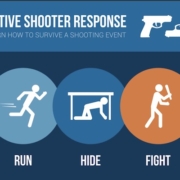
Conduct Vulnerability Assessments to Mitigate Violent Threats

Conduct Threat & Vulnerability Assessments to Mitigate Violent Acts

Frank Costa, President Nexgen Protection Services – 

UnitedHealthcare CEO Brian Thompson was fatally shot Wednesday morning in what authorities described as a ‘deliberate and targeted attack’ outside a Manhattan hotel hosting the health insurer’s investor conference.

The rise in violent incidents within the healthcare industry can often be traced back to personal frustrations with healthcare decisions, such as claim denials or unsuccessful procedures. These experiences can trigger strong emotional reactions, leading some individuals to express their anger through violent behavior. 

To mitigate these risks, healthcare organizations should conduct regular threat and vulnerability assessments using data-driven tools to identify exposures. Implementing layered security measures, such as access control systems, surveillance and secure office environments, can significantly enhance safety.


SOURCE: 

Bosch, R. Targeted killing of UnitedHealthcare CEO raises executive protection questions, Security Info Watch Magazine, 12/4/2024.
#protectionservices #securitystandards #publicsaftey  #mobilesecurity #securitythreats

 

Mitigate the Risks Associated with Seasonal Hiring

Mitigate the Risks Associated with Seasonal Hiring

Frank Costa, President Nexgen Protection Services – 

Businesses increasingly rely on temporary employees to meet fluctuating demands, particularly during peak seasons. However, the pressures of economic instability and reduced organizational resources make this workforce particularly vulnerable to unethical behaviors, such as theft and fraud, which can have significant financial and reputational repercussions for businesses.

Seasonal hires are particularly prone to engaging in employee crime or counterproductive behaviors due to several factors, including a lack of commitment to the organization, insufficient training, and limited supervision. 

To mitigate these risks, retailers can implement several strategies:

  • Ensure that background checks are completed even during rapid hiring phases to identify individuals with a history of criminal activity or connections to ORC.
  • Pre-employment screening assessments that measure job‑related integrity, nonviolent attitudes, safety orientations, drug-avoidance tendencies, service orientations, and tendencies to avoid collusion with ORC organizations can be instilled.
  • Provide all employees, including seasonal workers, with robust training on loss prevention and the consequences of ORC to raise awareness and deter participation in illegal activities.
  • Enhance supervision and monitoring of seasonal workers, particularly in high-risk areas, to help detect and prevent potential collusion with ORC groups.


SOURCE: 

Jones, J. W. Safeguarding Seasonal Success: Psychology-Informed Loss Prevention with Temporary Employees, Loss Prevention Magazine, 11/25/2024.
#protectionservices #securitystandards #publicsaftey  #mobilesecurity #securitythreats
 

Artificial intelligence and Machine Learning are Game Changers

Artificial intelligence and Machine Learning are Game Changers

Frank Costa, President Nexgen Protection Services – 

Artificial intelligence (AI) and machine learning (ML) are no longer just buzzwords; they’re reshaping the very fabric of how we protect our spaces, assets, and people. These smart systems are not just observing – they’re thinking, predicting and enabling security professionals to do more with less.

AI and ML allow security departments to extend their reach and effectiveness without necessarily expanding their workforce. 

  • Automated Monitoring: AI can continuously monitor multiple video feeds from one to dozens or many hundreds of cameras, flagging only the events that require human attention.
  • Intelligent Dispatching: ML algorithms can analyze incidents, learn from the patterns, and automatically dispatch the most appropriate response.
  • Predictive Maintenance: AI can monitor the health of security equipment, predicting failures before they occur, helping reduce downtime.

These capabilities don’t just save time; they fundamentally change how security teams operate, allowing them to be more strategic and proactive in their approach.


SOURCE: 

Carder, H. Smart systems usher in a new era of proactive physical security, Loss Prevention Magazine, 10/22/2024.
#protectionservices #securitystandards #publicsaftey  #mobilesecurity #securitythreats
 

License Plate Recognition (LPR): Secure, Intelligence Led Approach Retail Protection

License Plate Recognition (LPR): Secure, Intelligence Led Approach Retail Protection

Frank Costa, President Nexgen Protection Services – 

Retailers are increasingly focused on establishing additional layers of control – so it makes sense why License Plate Recognition (LPR) is becoming a common talking point when it comes to LP strategies.

The scope of loss prevention has expanded to human safety first and foremost. This shift is matching the rise of Organized Retail Crime and violence in stores.

LPR systems use high-resolution cameras and other systems to capture and convert images of license plates into alphanumeric text, which can then be cross-referenced. Retailers worldwide have adopted LPR (sometimes known as ANPR) increasingly as an important component of their security strategies.


SOURCE: 

Elevating Retail Security Integrating License Plate Recognition and

Audio Detection into Your Safety Strategy, Loss Prevention Magazine, 12/10/2023.
#protectionservices #securitystandards #publicsaftey  #mobilesecurity #securitythreats
 

Cargo theft involves the manipulation of data and identities to gain access to freight under false pretenses.

Cargo theft involves the manipulation of data and identities to gain access to freight under false pretenses.

Frank Costa, President Nexgen Protection Services – 

Organized retail crime (ORC) has been the buzzword in the retail loss prevention world for well over the past decade. During that time, the lack of support from the criminal justice system has certainly negated most of those efforts.

Criminals will establish fake trucking and brokerage companies with the sole intention of stealing cargo. They go through the same process as legitimate carrier information, registration, obtaining insurance, and operating authority. These companies then start completing legitimate jobs to establish a history of work performed. Once established, the thieves target high-value loads within their customer network to steal.

Insist on placing disposable GPS trackers inside your high-value loads. These cost-effective devices eliminate reverse logistics and device management while providing complete visibility of your freight, in real-time, from anywhere around the world. If and when a theft were to occur, you could follow the load in real-time from your phone to assist law enforcement in finding its exact location.

As of now, there is no silver bullet that will stop these thefts from occurring. But understanding the problem, training your staff, and installing protective measures will certainly act as a shield to help fend off these criminals.

SOURCE: 

Tabor, J. Strategic Cargo Theft: What It Is, How It Started, and What You Can Do to Stop It, Loss Prevention Magazine, 10/01/2024.
#protectionservices #securitystandards #publicsaftey  #mobilesecurity #securitythreats

 

Rising Workplace Violence Necessitates The Need For Implementing A Structured, Approach To Incident Response.

Rising Workplace Violence Necessitates The Need For Implementing A Structured, Approach To Incident Response.

Frank Costa, President Nexgen Protection Services – 

Every year, thousands of American workers report being victims of workplace violence, with assaults resulting in 57,610 injuries in 2021-22 alone, according to the National Safety Council. 

These alarming statistics underscore the urgent need for managers and safety professionals to implement a structured, approach to incident response. By adopting this proactive strategy, businesses can not only respond effectively to violent incidents but also mitigate future risks, ensuring a safer environment for all employees.

Most Common Challenges in Proper Incident Response

  • Information overload can occur in the chaos following an incident, making it difficult for staff to capture all relevant details accurately. As a result, important information may be missed or recorded inconsistently.
  • Communication breakdowns often arise when attempting to quickly alert nearby locations about potential threats, especially in the absence of a standardized communication system.
  • Connecting the dots between incidents can be challenging without a centralized system that allows for data comparison across different locations and time periods, making it difficult to determine if an incident is isolated or part of a larger trend.
  • Resource allocation becomes guesswork when there are no data-driven insights to guide decisions about where to deploy additional measures, particularly in high-risk areas or during specific time periods.
  • Learning from incidents is hampered when there isn’t a systematic way to analyze past events, leading to missed opportunities for implementing lessons that could prevent future incidents.
  • Balancing speed and thoroughness is a common challenge, as the urgency to respond quickly to violent incidents often conflicts with the need for thorough data collection and analysis.


These challenges require a thoughtful, systematic approach to incident response. By addressing these issues head-on, businesses can significantly improve their ability to respond to and prevent violent incidents, creating safer environments for employees and customers alike.

SOURCE: 

Workplace Violence Reporting: Proper Responses to Violent Incidents, Loss Prevention Magazine, 09/26/2024.
#protectionservices #securitystandards #publicsaftey  #mobilesecurity #securitythreats

Shrink From Theft Significantly Impacts Small-To Medium-Sized Retailers

Shrink From Theft Significantly Impacts Small-To Medium-Sized Retailers

Frank Costa, President Nexgen Protection Services – 

SMB retailers operate on narrow profit margins, they typically don’t have the budget or resources to invest in the training, security systems, and personnel to combat theft like larger retailers do. Offenders might also be more familiar with SMB retailers’ store layouts and know they lack specific security measures. If smaller stores with weaker security are located near larger stores with more robust protection, there might be an issue of displacement in which offenders pass by the big box shop for the mom-and-pop.

A low cost solution to theft prevention for SMB retailers is partnerships. Many law enforcement organizations have community policing units, where officers are specially trained to interact with local businesses and citizens to help them solve problems. SMB retailers can connect with this unit or a liaison and invite them to the store to dispense free crime prevention advice.


SOURCE: 

Fritsky, L. For Small- to Medium-Sized Business Retailers, Thwarting Theft Needn’t Come with High Effort or Costs, Loss Prevention Magazine, 10/09/2024.
#protectionservices #securitystandards #publicsaftey  #mobilesecurity #securitythreats

An Effective Physical Security Plan Starts with Deterrence, Detection, Delay, & Response.

An Effective Physical Security Plan Starts with Deterrence, Detection, Delay, & Response.

Frank Costa, President Nexgen Protection Services – 

Deterrence, Detection, Delay, & Response.

Physical security technology helps to control access, monitor behavior, and respond to potential threats, thus enhancing overall security posture. It involves securing organizational assets from harm due to physical events, including natural disasters like fires and floods, and human-inflicted dangers like theft and vandalism.

Elements of an effective physical security plan–

  1. Deterrence: Deterrence can encompass various equipment such as signage, security cameras and door access systems. It also includes physical barriers such as doors, locks and walls.  
  2. Detection: Technologies used for physical security detection measures are sensors, alarms and automatic notifications via video management software. 
  3. Delay: Simple security measures such as additional doors, locks and security guards can help delay incidents. More advanced physical security technology, such as key card access and mobile credentials, can make it more difficult for unauthorized users trying to enter a building.  
  4. Response: A response strategy such as building lockdowns or automatically notifying emergency services is critical. 

Successful and effective plans should include these technologies to ensure that a facility can prevent physical threats and take necessary action if a security breach occurs.


SOURCE: 

Berg, D. Playing a Crucial Role, Security Today, 09/1672024.
#protectionservices #securitystandards #publicsaftey  #mobilesecurity #securitythreats

Organized Crime and Shrinkage are on The Rise

Organized Crime and Shrinkage are on The Rise, Security Protection Is Essential to Offset Losses.

Frank Costa, President Nexgen Protection Services – 

The final stage of the supply chain process in retail, is getting products off trucks and into stores. Retailers face rising security threats, such as theft, shoplifting, internal fraud, vandalism, and even violence. Matters are intensified by self-checkout systems and the complexities of post-pandemic retail environments. 

Whether managing day-to-day retail operations or responding to disasters and large-scale events, retailers must be prepared for the unexpected. Nexgen Security offers scalable solutions to meet these challenges head-on, enabling businesses to enhance security, reduce losses, and maintain operational integrity.


SOURCE: 

Wolfe, C. WHITEPAPER: The End-of-Sale Process in the Retail Supply Chain. Loss Prevention Magazine, 10/20/2024.
#protectionservices #securitystandards #publicsaftey  #mobilesecurity #securitythreats

Businesses should partner with law enforcement officers to develop safeguards for their businesses to prevent criminal activity.

Businesses Must Partner with Law Enforcement to Develop Safeguards

Frank Costa, President Nexgen Protection Services – 


Small businesses typically don’t have the budget or resources to invest in the training, security systems, and personnel to combat theft like larger organizations.

Businesses should partner with law enforcement officers to develop safeguards for their businesses to prevent criminal activity. Helping businesses reduce and prevent crime is both a police and community effort.

Given limited resources, critically assess problem areas with solutions that will have the greatest impact on your bottom line. 


SOURCE: 

Fritsky, L. For Small- to Medium-Sized Business Retailers, Thwarting Theft Needn’t Come with High Effort or Costs. Loss Prevention Magazine, 08/01/2024
#protectionservices #securitystandards #publicsaftey  #mobilesecurity #securitythreats