
Posts

Real-Security-vs.-The-Illusion-of-Protection

Real Security versus the Illusion of Protection

Real Security versus the Illusion of Protection

By Frank Costa, President, Nexgen Protection Services

There is still a common misconception in the general public that security simply means “walking around and calling the police when something happens.” In reality, that approach reflects a limited, reactive model—not a true security strategy.

When security personnel are untrained, under-resourced, or not integrated into a broader risk framework, organizations may appear protected, but are often only experiencing the illusion of protection. Incidents are not prevented—they are merely reported after the fact.

It is important to recognize that this is often a systems problem, not an individual officer problem. Without proper training, clear protocols, intelligence support, and operational authority, even well-intentioned personnel are constrained in their ability to act effectively.

A professional security protection team changes this dynamic.

Modern protection teams are built around prevention, preparedness, and response capability. They are trained to assess risk in real time, de-escalate situations, coordinate emergency response, and integrate with law enforcement when necessary—rather than relying on it as the first and only option.

Organizations that invest in competent, structured security programs move from passive observation to active risk management. That shift is what creates real protection—not just the appearance of it.

Real security is not a uniform. It is a capability.

APA Source:
ASIS International. (2023). Security services standards: Professional competencies and effective incident response in private security operations.

#SecurityManagement #RiskManagement #CorporateSecurity #ExecutiveProtection #LossPrevention #SecurityStrategy #CrisisResponse #WorkplaceSafety #ProfessionalSecurity #BusinessContinuity


When-Every-Camera-Becomes-a-Battlefield-Sensor.

Security Cameras are Battlefield Sensors

Security Cameras are Battlefield Sensors

By Frank Costa, President, Nexgen Protection Services

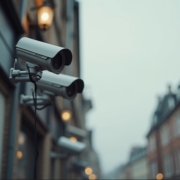
Security cameras were once seen as passive tools for safety and deterrence. Today, they are increasingly part of a much larger—and more complex—global security picture.

Reports from modern conflict zones show how unsecured surveillance systems, including street and infrastructure cameras, can be exploited to gain real-time visibility into environments. In some cases, these feeds have been used to support targeting decisions, assess operational outcomes, and inform follow-on actions. The implication is clear: connected devices can become intelligence assets—whether intended or not.

This reality highlights why hiring a professional security protection team is no longer optional for high-risk environments.

A modern protection team doesn’t just “monitor cameras.” They secure the entire ecosystem—ensuring surveillance systems are properly configured, access-controlled, encrypted, and continuously assessed for vulnerabilities. They also integrate physical security operations with cyber hygiene practices to reduce the risk of external exploitation.

Beyond technology, trained security professionals bring critical judgment. They can identify suspicious network behavior, respond to potential compromises, and coordinate with technical and operational stakeholders in real time.

In today’s environment, security is no longer just about visibility—it’s about control, integrity, and resilience across both physical and digital domains.

APA Source:
U.S. Department of Defense. (2024). Emerging threats in contested environments: Surveillance systems, cyber exploitation, and operational security risks.

#CyberSecurity #PhysicalSecurity #RiskManagement #SurveillanceSecurity #ExecutiveProtection #CriticalInfrastructure #ThreatIntelligence #SecurityStrategy #DefenseInnovation #OperationalSecurity


Cyber-Physical-Security-Must-Be-Integrated

Cyber & Physical Security Must Be Integrated — Not Optional

Cyber & Physical Security Must Be Integrated

By Frank Costa, President, Nexgen Protection Services

Security threats no longer fit neatly into “cyber” or “physical” categories. They are converging—and organizations that fail to integrate both domains are increasingly exposed.

Recent warnings tied to the 2026 global event cycle highlight this shift. Reports of attempted cyber disruptions against high-profile international event infrastructure underscore how digital attacks can directly impact physical operations, logistics, and public safety. At the same time, the Cybersecurity and Infrastructure Security Agency (CISA) has urged organizations to replace end-of-life network and IoT devices, noting that unsupported systems are actively being targeted by attackers.

This is where hiring a modern security protection team becomes essential.

Integrated teams bridge the gap between cyber and physical security by combining threat intelligence, on-the-ground protection, and technical risk management. They recognize that vulnerabilities in outdated devices can translate into real-world access risks, and that physical environments—venues, facilities, personnel—are often entry points for broader digital compromise.

A unified security approach enables:
• Faster identification of cross-domain threats
• Stronger incident response coordination
• Reduced risk from outdated or unmonitored systems
• Improved resilience for events, infrastructure, and operations

In today’s environment, siloed security is a liability. Integration is the standard for resilience.

APA Source:
Cybersecurity and Infrastructure Security Agency. (2026). Advisory on end-of-life network and IoT device vulnerabilities and risk mitigation guidance.

#CyberSecurity #PhysicalSecurity #IntegratedSecurity #RiskManagement #ThreatIntelligence #CISA #CriticalInfrastructure #ExecutiveProtection #SecurityStrategy #BusinessContinuity


Integrated-Security-The-Future-of-Protection.

Integrated Security: The Future of Protection

Integrated Security.

By Frank Costa, President, Nexgen Protection Services

The U.S. security services market—is undergoing a major transformation. The integration of physical protection, investigations, and cyber defense is no longer optional; it’s the new standard for organizations facing complex, multi-layered threats.

Hiring a professional security protection team is at the center of this shift.

Modern protection teams don’t operate in silos. They connect physical security with investigative intelligence and cybersecurity awareness, creating a unified strategy that identifies risks earlier and responds more effectively. Whether it’s detecting suspicious behavior on-site, uncovering fraud through investigations, or mitigating cyber-related vulnerabilities, integration leads to stronger outcomes.

This approach also improves efficiency and accountability. Instead of fragmented vendors and delayed communication, organizations benefit from a coordinated team that shares intelligence in real time and adapts quickly to evolving threats.

Most importantly, integrated security protects more than assets—it safeguards reputation, leadership, and business continuity.

As threats become more sophisticated, so must the response. Organizations that invest in integrated security teams position themselves to stay ahead, not react behind.

APA Source:
IBISWorld. (2024). Security services industry in the US: Market size and integrated security trends.

#IntegratedSecurity #CorporateSecurity #CyberSecurity #RiskManagement #ExecutiveProtection #BusinessContinuity #SecurityStrategy #ThreatIntelligence #PhysicalSecurity #Innovation


Redefining-Security-Moving-Beyond-Traditional-Guarding-Models

Redefining Security: Moving Beyond Traditional Guarding Models

Redefining Security.

By Frank Costa, President, Nexgen Protection Services

Today’s security challenges demand more than a static guarding presence. Organizations are shifting toward modern, technology-driven approaches that prioritize transparency, adaptability, and measurable outcomes.

Hiring a professional security protection team is central to this evolution.

Unlike traditional models, modern security teams integrate advanced technologies—such as real-time monitoring systems, data analytics, and mobile reporting tools—with highly trained personnel. This combination provides clients with greater visibility into operations, faster response times, and actionable insights rather than reactive reporting.

Transparency is a key differentiator. Clients gain access to clear communication, detailed incident reporting, and performance metrics that demonstrate value. At the same time, adaptable security teams can quickly adjust strategies based on emerging risks, changing environments, or client needs.

The result? Better outcomes. Reduced incidents, improved safety, and stronger alignment between security operations and business objectives.

Security is no longer just about presence—it’s about performance, intelligence, and trust.

APA Source:
ASIS International. (2023). Transforming physical security: Integrating technology and personnel for enhanced outcomes.

#SecurityInnovation #CorporateSecurity #RiskManagement #SecurityStrategy #PhysicalSecurity #BusinessContinuity #TechDriven #SecurityLeadership #Transparency #ClientSuccess

Faster-Decisions-Stronger Security

Closing the Gap: Faster Decisions, Stronger Security

Faster Decisions, Stronger Security.

By Frank Costa, President, Nexgen Protection Services

The biggest delays in security response don’t happen at detection—they happen between the alert and the decision. In high-stakes situations, seconds matter. The ability to assess, decide, and act quickly can mean the difference between prevention and loss.

This is where hiring a professional security protection team delivers real value.

Trained teams are equipped to interpret alerts in real time, cut through noise, and make informed decisions under pressure. They combine experience, situational awareness, and established protocols to reduce hesitation and accelerate response. Instead of relying solely on automated systems or fragmented communication, organizations benefit from a coordinated, human-led approach.

A dedicated security team also strengthens preparedness. Through advance planning, scenario training, and continuous risk assessment, they minimize uncertainty when incidents occur. This leads to faster, more confident decision-making and improved outcomes across the board.

Technology can detect threats—but people decide how to respond. Bridging that gap is what turns security from reactive to proactive.

APA Source:
ASIS International. (2022). Security risk management: Reducing response time through trained personnel and integrated systems.

#SecurityStrategy #RiskManagement #CorporateSecurity #CrisisResponse #ExecutiveProtection #DecisionMaking #BusinessContinuity #ThreatAssessment #PhysicalSecurity #SecurityLeadership


Trust.-Why-Human-Security-Expertise-Still-Matters

Trust in the Age of AI: Why Human Security Expertise Still Matters

Human Security Expertise Still Matters.

By Frank Costa, President, Nexgen Protection Services

Trust is the most valuable currency in the security industry—especially as artificial intelligence (AI) rapidly evolves. While AI-driven tools are transforming surveillance, analytics, and threat detection, they also introduce new questions around reliability, privacy, and decision-making.

This is where hiring a professional security protection team becomes essential.

AI can process data, but trained security professionals provide context, judgment, and accountability. A dedicated protection team ensures that technology is used effectively—interpreting alerts, validating threats, and making real-time decisions that machines alone cannot handle. They also bridge the trust gap, offering a human presence that reassures employees, executives, and clients.

Beyond technology oversight, these teams conduct risk assessments, manage crisis response, and adapt quickly to evolving threats—whether physical or digital. In an era where AI can both enhance and complicate security operations, the combination of advanced tools and experienced personnel creates a stronger, more resilient defense.

As innovation accelerates, trust will define the future of security. And trust is built by people.

APA Source:
ISC West. (2024). Emerging trends in security: AI, trust, and the role of human expertise.

#SecurityIndustry #ArtificialIntelligence #ExecutiveProtection #CorporateSecurity #RiskManagement #TrustMatters #SecurityStrategy #ISCWest #Innovation #HumanInTheLoop


High-Tech-Auto-theft.-Gone-in-60-Seconds.

High-Tech Auto theft – Gone in 60 Seconds.

Frank Costa, President, Nexgen Protection Services

Gone in 60 Seconds. That’s the reality of today’s organized, high-tech auto theft rings. In recent cases, more than 100 vehicles were stolen across multiple states, quickly moved through coordinated networks, and shipped overseas—often hidden in containers falsely labeled as household goods. This isn’t random crime; it’s fast, strategic, and highly profitable.

For businesses, executives, and fleet owners, this highlights a critical point: reactive security is no longer enough. Proactive protection is essential.

Hiring a professional security protection team adds layers of defense that technology alone can’t provide. Trained personnel conduct risk assessments, monitor vulnerable access points, coordinate surveillance systems, and respond in real time. They also help implement deterrence strategies—because a visible security presence can significantly reduce targeting.

Beyond prevention, these teams support incident response, documentation, and coordination with law enforcement—reducing downtime, financial loss, and operational disruption. For companies managing vehicle fleets or high-value assets, this isn’t just about safety—it’s about continuity and protecting your bottom line.

Organized crime is evolving. Your security strategy should too.

APA Source:
United States Department of Justice. (2024). Multi-state auto theft ring dismantled; vehicles trafficked overseas.

#SecurityMatters #RiskManagement #AssetProtection #CorporateSecurity #BusinessContinuity #FleetManagement #CrimePrevention #ExecutiveProtection #PhysicalSecurity #SecurityStrategy


Layered Security Strengthens School Safety

Layered Security Strengthens School Safety

School districts across the United States are increasingly adopting layered security strategies to protect students and staff amid evolving threats. From physical security measures to technology and training, a comprehensive approach is essential to address today’s complex risk environment.

By Frank Costa, President, Nexgen Protection Services — Layered Security 

Layered security combines multiple protective measures:

  • Physical barriers and controlled access – secure entrances, fencing, and visitor management systems.
  • Surveillance and monitoring technology – cameras, alarms, and real-time alert systems.
  • Staff training and emergency protocols – ensuring personnel know how to respond quickly and effectively.
  • Behavioral awareness programs – helping educators and students identify early warning signs and report concerns.

By integrating these elements, districts create a resilient safety ecosystem where risks are detected early, threats are mitigated proactively, and response times are faster and more coordinated.

Beyond technology and procedures, fostering a culture of vigilance and communication is key. When students, staff, and administrators understand their role in security, the community as a whole becomes safer.

As threats continue to evolve, school districts that invest in layered, proactive security are better positioned to protect their most important assets—the people who learn, teach, and work on campus.

Reference (APA):
Fennelly, L. J. (2022). Effective physical security (6th ed.). Butterworth-Heinemann.

#SchoolSecurity #StudentSafety #RiskManagement #PhysicalSecurity #EmergencyPreparedness #SecurityStrategy #LayeredSecurity #ThreatPrevention #CampusSafety #SchoolSafety

Integrated Security

Integrated Security is Transforming the U.S. Homeland

The U.S. security services market, valued at $48.8 billion, is undergoing a fundamental shift. Organizations are no longer viewing physical security, investigations, and cyber defense as separate functions—they are increasingly integrated into a unified approach to risk management.

By Frank Costa, President, Nexgen Protection Services — Integrated Security 

This integration provides several advantages:

  • Holistic threat detection: Combining physical and cyber intelligence allows organizations to identify vulnerabilities that might otherwise go unnoticed.
  • Faster incident response: Coordinated teams can act immediately across multiple domains, reducing the impact of both physical and digital threats.
  • Streamlined investigations: Unified data and reporting systems improve the efficiency and effectiveness of post-incident analysis.

As threats evolve, from cyber intrusions to insider risks and physical breaches, clients are demanding security solutions that are proactive, comprehensive, and interoperable. Providers that can seamlessly merge these disciplines are capturing market share and redefining industry standards.

For businesses, the takeaway is clear: investing in integrated security is no longer optional. The most effective strategies combine technology, personnel, and intelligence to anticipate, deter, and respond to risks across every potential front.

The transformation of the $48.8 billion security market reflects a broader truth: in today’s complex threat environment, security works best when it works together.

Reference (APA):
IBISWorld. (2026). Security services in the US: Market research report.

#SecurityIndustry #IntegratedSecurity #RiskManagement #CyberSecurity #PhysicalSecurity #Investigations #BusinessContinuity #ThreatPrevention #CorporateSecurity #SecurityTrends