
Posts

Speed Matters in Security

Why Speed Matters in Security

In security, speed isn’t just important—it’s everything. When an incident occurs, the difference between loss and prevention often comes down to how quickly your team can respond.

By Frank Costa, President, Nexgen Protection Services

A strong security strategy isn’t just about reacting after the fact. It’s about being ready before anything happens, combining multiple layers of protection:

  • Immediate response capability – ensuring threats are addressed in real time.
  • Visible deterrence – making it clear that potential intruders are being watched.
  • Continuous monitoring – leveraging technology to detect risks before they escalate.
  • Skilled personnel on the ground – trained experts who can act decisively when seconds matter.

The reality is simple: security isn’t about looking back—it’s about preparing for what’s ahead. Organizations that integrate speed, visibility, and expertise into their approach reduce risk, protect assets, and safeguard people more effectively than those who rely solely on reactive measures.

Investing in proactive, well-coordinated security isn’t just smart—it’s essential in a world where threats can evolve in an instant.

Reference (APA):
Fennelly, L. J. (2022). Effective physical security (6th ed.). Butterworth-Heinemann.

#Security #RiskManagement #PhysicalSecurity #SecurityStrategy #BusinessContinuity #IncidentResponse #Deterrence #ThreatPrevention #CorporateSecurity #SecurityIndustry

Surge in Break-Ins

Surge in Break-Ins: A Wake-Up Call

An surge in regional break-ins is more than a statistic—it’s a clear signal that local communities are facing a rapidly evolving security challenge.

By Frank Costa, President, Nexgen Protection Services

For homeowners and businesses alike, this rise underscores a critical shift: security can no longer be reactive. Waiting until after an incident occurs is no longer enough.

CCTV and modern surveillance systems play a powerful role—not just in capturing incidents, but in preventing break-ins altogether. The most effective security strategies focus on deterrence. A visible, high-quality camera system sends a clear message: this property is protected, monitored, and not an easy target.

Criminals often look for opportunity and vulnerability. When they encounter strong visual security measures—cameras, lighting, and clear signage—they are far more likely to move on to a less protected location.

This is where mindset matters. Security isn’t just about recording evidence; it’s about influencing behavior before a crime ever happens.

For communities, this means investing in visible, proactive measures that protect not only individual properties but entire neighborhoods. For businesses, it’s about safeguarding assets, employees, and operations by reducing risk at the front line.

In today’s environment, the most effective security strategy is simple: be seen, be prepared, and be protected.

Reference (APA):
National Institute of Justice. (2020). Five things about deterrence. U.S. Department of Justice.

#Security #CCTV #CrimePrevention #RiskManagement #PhysicalSecurity #BusinessSecurity #CommunitySafety #Surveillance #Deterrence #SecurityIndustry


Understanding FPCON: A Critical Security Framework

Understanding FPCON: A Critical Security Framework

By Frank Costa, President, Nexgen Protection Services — FPCON: A Critical Security Framework

In today’s evolving threat landscape, understanding how the U.S. protects its people and facilities is more important than ever. One key system used across military installations and government environments is the Force Protection Condition (FPCON). A critical security framework. 

FPCON is a standardized system developed by the U.S. Department of Defense to assess and respond to terrorist threats against personnel and facilities. It provides commanders with a structured framework to adjust security measures based on real-time intelligence and risk levels. 

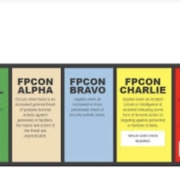
The system operates across five escalating levels: Normal, Alpha, Bravo, Charlie, and Delta. As threat levels increase, so do security measures—from routine ID checks and random inspections to full lockdown scenarios with restricted access and heightened armed presence. 

What makes FPCON especially effective is its proactive design. It doesn’t just respond to threats—it helps deter, detect, delay, and defend against potential attacks before they occur. 

For businesses operating near military bases, government facilities, or critical infrastructure, awareness of FPCON levels is essential. Sudden changes can impact access, logistics, employee movement, and overall operations.

In a world where threats can evolve rapidly, FPCON  is a critical security framework that underlines a broader truth: security is not static. It’s dynamic, intelligence-driven, and requires constant adaptation.

Organizations that understand and align with these systems are better positioned to protect their people, assets, and continuity.

Reference (APA):
Military.com. (2025). Force Protection Condition (FPCON) levels explained.

#SecurityAwareness #FPCON #RiskManagement #CorporateSecurity #ThreatIntelligence #BusinessContinuity #HomelandSecurity #PhysicalSecurity #SecurityIndustry #Leadership

Rising U.S. Threats Amid Iran Conflict

Rising U.S. Threats Amid Iran Conflict

By Frank Costa, President, Nexgen Protection Services — Rising U.S. Threats 

The evolving Iran-region conflict is no longer a distant geopolitical issue—it is actively shaping the threat environment inside the United States.

According to the Department of Homeland Security (DHS), ongoing tensions have created a heightened threat landscape, with increased risks spanning both cyber and physical domains. Pro-Iranian cyber actors and hacktivist groups are expected to conduct attacks against U.S. networks, ranging from disruption to more targeted operations. 

At the same time, DHS warns of a more unpredictable danger: individuals or small groups within the U.S. who may become inspired by overseas events. These actors can mobilize quickly, often without direct coordination, making them harder to detect and prevent. 

Recent large-scale strikes in early 2026 have only intensified these risks. Cyber incidents linked to Iran-aligned groups and rising concerns about retaliatory activity highlight how global conflict increasingly translates into domestic exposure. 

For businesses and security leaders, this shift is critical. The line between international conflict and domestic risk is thinner than ever. Organizations must strengthen cyber defenses, monitor threat intelligence, and prepare for a broader spectrum of potential incidents—from digital disruption to ideologically motivated violence.

The takeaway to rising U.S. threats is clear: geopolitical awareness is now a core component of enterprise security strategy. What happens overseas can—and increasingly does—impact operations at home.

Reference (APA):
U.S. Department of Homeland Security. (2025). National Terrorism Advisory System Bulletin: Summary of the threat to the United States.

#SecurityThreats #CyberSecurity #RiskManagement #HomelandSecurity #ThreatIntelligence #BusinessContinuity #NationalSecurity #CorporateSecurity #Geopolitics #2026Trends

Border Security Risks Are Rising in 2026

Border Security Risks Are Rising in 2026

By Frank Costa, President, Nexgen Protection Services

Boarder Security Risks

Violence near the U.S.–Mexico border is escalating in ways that demand urgent attention from businesses, security leaders, and policymakers alike.

Criminal organizations are no longer relying solely on traditional tactics. Increasingly, they are deploying advanced methods—such as drone-dropped explosives and improvised explosive devices (IEDs)—to expand their reach and capabilities. These developments signal a shift toward more sophisticated, asymmetric threats that were once largely confined to conflict zones.

For organizations operating in border states or along key supply chain corridors, the implications are serious. The security risk is no longer isolated—it has the potential to spill over into U.S. communities, impacting personnel safety, logistics, and overall business continuity.

This evolving threat landscape requires a more proactive and intelligence-driven approach to security risk assessment. Companies should reassess risk exposure, strengthen coordination with local and federal authorities, and ensure that their security partners are equipped to respond to emerging, high-impact scenarios.

Preparedness is no longer optional—it’s a strategic necessity.

Reference (APA):
Congressional Research Service. (2025). Mexico: Organized crime and drug trafficking organizations.

#BorderSecurity #RiskManagement #SecurityThreats #ExecutiveProtection #BusinessContinuity #CorporateSecurity #SupplyChainRisk #SecurityIndustry #ThreatIntelligence #2026Trends

Security Gaps

Spotting and Shutting Security Gaps in Healthcare

Spotting and Shutting Security Gaps in Healthcare Visitor Management

Frank Costa, President, Nexgen Protection Services

Hospitals and healthcare facilities are facing an increasingly complex risk landscape — from unauthorized access and patient privacy breaches to workplace violence and operational disruptions. In this environment, identifying security gaps before an incident occurs can make all the difference.

Visitor management is a critical frontline defense. Every person who enters a facility — whether a patient, family member, contractor, vendor, or volunteer — represents a potential point of vulnerability. Without proper procedures, bad actors or accidental breaches can compromise safety, privacy, and compliance.

ASIS International emphasizes that robust visitor management systems integrate credentialing, access control, monitoring, and audit trails to reduce risk and ensure accountability (ASIS International, 2020). Effective systems not only track who is in the facility but also help identify unusual patterns or behaviors that may indicate a security threat.

Practical strategies for healthcare security leaders include:

  • Implementing pre-registration and verification for all visitors
  • Using ID badges, wristbands, or digital credentials tied to access levels
  • Monitoring entrances and high-risk areas with video and patrols
  • Maintaining audit logs and regular reviews to detect anomalies
  • Training staff to recognize and escalate suspicious behavior

By proactively closing security gaps in visitor management, healthcare organizations protect patients, staff, and sensitive data, while maintaining a safe and welcoming environment. Security is not just about responding to incidents — it’s about anticipating risk and building trust through vigilance.


Reference (APA 7th ed.)
ASIS International. (2020). Healthcare security guidelines: Visitor management and access control. ASIS International.

#HealthcareSecurity #VisitorManagement #SecurityProtection #RiskManagement #PatientSafety #OperationalResilience #HospitalSecurity #AccessControl #SecurityLeadership #WorkplaceSafety


Security Protection

Who’s Really Inside Your Building? Rethinking Security Protection

By Frank Costa, President, Nexgen Protection Services

Take a moment and think about it. Not just the employees you see every day, but everyone who passes through your doors: cleaners, delivery drivers, contractors, IT support, facilities teams, visitors, temporary staff, and suppliers. How many of them were inside your building today — and how well do you really know them?

Physical security isn’t just about locking doors or staffing a front desk. It’s about understanding and managing access risk across all personnel. Every individual who enters your facility represents a potential vulnerability — from accidental safety oversights to deliberate threats.

ASIS International emphasizes that comprehensive security protection programs account for all building occupants, integrating access control, identity verification, and monitoring procedures to mitigate risk while maintaining operational flow (ASIS International, 2021). This includes temporary personnel, vendors, and service providers, whose presence is often overlooked in standard security planning.

Best practices include:

  • Vetting and credentialing all personnel with access to sensitive areas
  • Implementing time-bound or role-based access controls
  • Monitoring entry points and activity through surveillance and audit logs
  • Conducting regular reviews of visitor and contractor access policies

By thinking beyond employees, security leaders can reduce blind spots, strengthen operational resilience, and protect both people and assets. Security is not just a policy — it’s an awareness that every individual matters.

Reference (APA 7th ed.)
ASIS International. (2021). Physical security professional standards. ASIS International.

#CorporateSecurity #SecurityProtection #AccessControl #RiskManagement #PhysicalSecurity #SecurityAwareness #EnterpriseRisk #VisitorManagement #OperationalResilience #WorkplaceSafety


Privacy

Bug Sweeps: Protecting Privacy and Securing What Matters

By Frank Costa, President, Nexgen Protection Services

In a world where information is a high-value asset, bug sweeps have become an essential tool for safeguarding privacy, securing sensitive data, and providing peace of mind. Whether you’re an individual protecting your personal space or a business defending proprietary information, the risks of unauthorized surveillance are real and growing.

Bug sweeps detect hidden microphones, cameras, GPS trackers, and other covert devices that can compromise personal or corporate security. By proactively identifying vulnerabilities, individuals and organizations can prevent espionage, data breaches, and reputational damage before they occur.

According to ASIS International, systematic technical surveillance countermeasures (TSCM) — commonly known as bug sweeps — are a best practice in both corporate and executive protection programs (ASIS International, 2019). TSCM services combine specialized equipment, trained personnel, and methodical inspection processes to uncover threats that are otherwise invisible.

For businesses, bug sweeps protect intellectual property, trade secrets, client information, and sensitive strategic plans. For individuals, they provide assurance that private conversations, meetings, or personal activities remain confidential. Beyond protection, bug sweeps foster a culture of vigilance — demonstrating that privacy and security are priorities.

In an era of increasingly sophisticated surveillance, proactive detection is far better than reactive response. Investing in bug sweeps isn’t just about mitigating risk; it’s about preserving trust, integrity, and operational confidence.

Reference (APA 7th ed.)
ASIS International. (2019). Technical surveillance countermeasures (TSCM) standard. ASIS International.

#PrivacyProtection #BugSweeps #TechnicalSurveillanceCountermeasures #CorporateSecurity #ExecutiveProtection #DataSecurity #InformationSecurity #RiskManagement #SecurityAwareness #ProtectWhatMatters


Security Protection

Adaptability Is the Key to Modern Security Protection

By Frank Costa, President, Nexgen Protection Services

In today’s complex threat environment, the only constant is change. Risks evolve, vulnerabilities shift, and attackers constantly innovate. Effective corporate security protection depends on the ability to adapt quickly, absorb new information, and respond decisively.

Security professionals demonstrate this adaptability by navigating emerging threats, adopting new tools and technologies, and continuously refining operational approaches. Whether addressing physical security protection, cyber threats, insider risk, or hybrid attack vectors, success depends on staying one step ahead.

As highlighted by ASIS International, top-performing security teams continuously update procedures, integrate advanced technology, and leverage intelligence to anticipate and mitigate risk (ASIS International, 2021). Tools such as real-time monitoring, behavioral analytics, and incident management platforms enhance both situational awareness and response capabilities.

Adaptability also requires mindset: security leaders must challenge assumptions, learn from near misses, and incorporate lessons from past incidents. Teams that embrace this approach can pivot rapidly, safeguard assets, and protect employees and organizational reputation.

In essence, adaptability bridges intelligence and action. Organizations that cultivate adaptable security teams gain a strategic advantage — they don’t just react to incidents; they anticipate, prevent, and respond with precision.

References (APA 7th ed.)
ASIS International. (2021). Professional standards for security management. ASIS International.

#CorporateSecurity #SecurityLeadership #RiskManagement #OperationalResilience #ThreatDetection #ProtectiveServices #SecurityStrategy #Adaptability #EnterpriseSecurity #ProactiveProtection


Executive Protection Is Strategy — Not Just Presence

By Frank Costa, President, Nexgen Protection Services

Executive protection goes far beyond a visible security presence. It is about proactive planning, discretion, and risk prevention long before a threat materializes.

In today’s environment, corporate leaders face a spectrum of risks — physical threats, reputational targeting, cyber exposure, travel vulnerabilities, and insider risk. A bodyguard alone does not mitigate these complexities. A strategy does.

According to ASIS International, effective protection programs are grounded in risk assessment, advance planning, intelligence gathering, and continuous evaluation — not reactive deployment (ASIS International, 2021). The emphasis is on identifying vulnerabilities before they are exploited.

Research on protective intelligence further reinforces this principle. Frederick S. Calhoun and Stephen W. Weston highlights that targeted violence is often preceded by observable behaviors and leakage — meaning prevention depends on early detection and structured threat assessment (Calhoun & Weston, 2003).

What distinguishes a mature executive protection program?

  • Comprehensive risk assessments tied to business operations
  • Advance work and route planning for travel and events
  • Protective intelligence monitoring and behavioral threat assessment
  • Cyber hygiene integration with physical protection
  • Discretion that preserves executive productivity and brand reputation

The goal is not visibility. The goal is continuity.

Executive protection, done correctly, is quiet, intelligence-driven, and aligned with enterprise risk strategy. When it works, nothing happens — and that is success.


References (APA 7th ed.)
ASIS International. (2021). Executive protection standard. ASIS International.
Calhoun, F. S., & Weston, S. W. (2003). Contemporary threat management: A practical guide for identifying, assessing, and managing individuals of violent intent. Specialized Training Services.


#ExecutiveProtection #ProtectiveIntelligence #CorporateSecurity #RiskManagement #ThreatAssessment #SecurityLeadership #BusinessContinuity #EnterpriseRisk