

Real Security versus the Illusion of Protection
Real Security versus the Illusion of Protection
By Frank Costa, President, Nexgen Protection Services
There is still a common misconception in the general public that security simply means “walking around and calling the police when something happens.” In reality, that approach reflects a limited, reactive model—not a true security strategy.
When security personnel are untrained, under-resourced, or not integrated into a broader risk framework, organizations may appear protected, but are often only experiencing the illusion of protection. Incidents are not prevented—they are merely reported after the fact.
It is important to recognize that this is often a systems problem, not an individual officer problem. Without proper training, clear protocols, intelligence support, and operational authority, even well-intentioned personnel are constrained in their ability to act effectively.
A professional security protection team changes this dynamic.
Modern protection teams are built around prevention, preparedness, and response capability. They are trained to assess risk in real time, de-escalate situations, coordinate emergency response, and integrate with law enforcement when necessary—rather than relying on it as the first and only option.
Organizations that invest in competent, structured security programs move from passive observation to active risk management. That shift is what creates real protection—not just the appearance of it.
Real security is not a uniform. It is a capability.
APA Source:
ASIS International. (2023). Security services standards: Professional competencies and effective incident response in private security operations.
#SecurityManagement #RiskManagement #CorporateSecurity #ExecutiveProtection #LossPrevention #SecurityStrategy #CrisisResponse #WorkplaceSafety #ProfessionalSecurity #BusinessContinuity
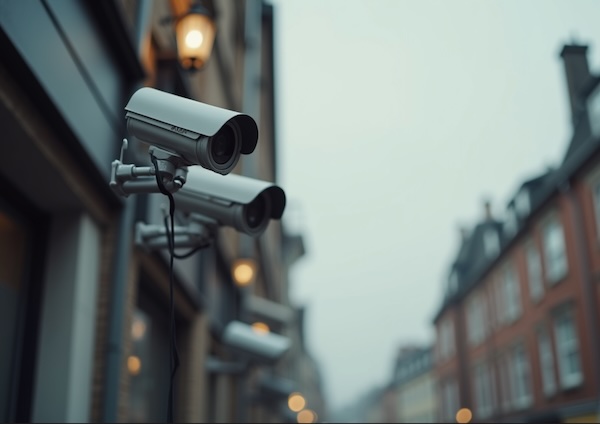
Security Cameras are Battlefield Sensors
Security Cameras are Battlefield Sensors
By Frank Costa, President, Nexgen Protection Services
Security cameras were once seen as passive tools for safety and deterrence. Today, they are increasingly part of a much larger—and more complex—global security picture.
Reports from modern conflict zones show how unsecured surveillance systems, including street and infrastructure cameras, can be exploited to gain real-time visibility into environments. In some cases, these feeds have been used to support targeting decisions, assess operational outcomes, and inform follow-on actions. The implication is clear: connected devices can become intelligence assets—whether intended or not.
This reality highlights why hiring a professional security protection team is no longer optional for high-risk environments.
A modern protection team doesn’t just “monitor cameras.” They secure the entire ecosystem—ensuring surveillance systems are properly configured, access-controlled, encrypted, and continuously assessed for vulnerabilities. They also integrate physical security operations with cyber hygiene practices to reduce the risk of external exploitation.
Beyond technology, trained security professionals bring critical judgment. They can identify suspicious network behavior, respond to potential compromises, and coordinate with technical and operational stakeholders in real time.
In today’s environment, security is no longer just about visibility—it’s about control, integrity, and resilience across both physical and digital domains.
APA Source:
U.S. Department of Defense. (2024). Emerging threats in contested environments: Surveillance systems, cyber exploitation, and operational security risks.
#CyberSecurity #PhysicalSecurity #RiskManagement #SurveillanceSecurity #ExecutiveProtection #CriticalInfrastructure #ThreatIntelligence #SecurityStrategy #DefenseInnovation #OperationalSecurity

Staying Ahead of Risk in an Era of Uncertainty
Risk in an Era of Uncertainty
By Frank Costa, President, Nexgen Protection Services
Uncertainty and instability now define the world. Security leaders respond by focusing on one clear priority: getting ahead of evolving threats. From emerging threat actors and extremism to growing concerns around team safety and well-being, the message was consistent—reactive security is no longer enough.
This is where hiring a professional security protection team delivers measurable value.
Modern protection teams are built to anticipate risk, not just respond to it. They continuously monitor threat landscapes, analyze intelligence on emerging actors, and translate that insight into practical protection strategies. This proactive posture helps organizations reduce exposure before incidents occur.
Equally important is the focus on personnel well-being. Security professionals are increasingly recognizing that resilience isn’t just about protecting assets—it’s about protecting people. Structured protection teams provide operational support, fatigue management considerations, and safer working environments for those on the front lines.
By integrating intelligence, on-the-ground protection, and risk management, these teams help organizations stay ahead of instability rather than react to it.
In a volatile environment, preparedness is not optional—it is a competitive and operational advantage.
APA Source:
ASIS International. (2025). Global security trends report: Emerging threats, extremism, and duty of care for security teams.
#SecurityManagement #RiskManagement #ThreatIntelligence #CorporateSecurity #ExecutiveProtection #WorkplaceSafety #CrisisPreparedness #SecurityStrategy #DutyOfCare #BusinessContinuity