

Effective Surveillance in Investigations
Conducting Effective Surveillance in Investigations: Why It Matters and How to Do It Right
By Frank Costa, President, Nexgen Protection Services
Effective surveillance remains one of the most powerful tools in professional investigations — but it’s more than just “watching someone.” By blending benefits, legal awareness, and tactical modalities, investigators can gather high-value intelligence while staying within ethical and legal boundaries.
Surveillance offers real-time insight into a subject’s behavior, patterns, and interactions — critical for criminal, civil, and fraud investigations. Whether through mobile (tailing a subject) or static (fixed observation) surveillance, investigators can collect evidence that supports case development, aids in pattern recognition, and enhances understanding of complex behaviors.
Modern investigations also leverage electronic and digital modalities — such as video footage, aerial systems, and online open-source intelligence — to extend observational reach without direct contact. These tools increase accuracy and evidence richness when used responsibly.
However, legalities are foundational: investigators must heed privacy laws, trespass restrictions, and regulatory limits. Licensed professionals cannot enter private property without permission, ignore clearly established privacy barriers, or employ deceptive or intimidating practices. Violations not only risk evidence being excluded in legal proceedings but can also result in civil and criminal liability or disciplinary action.
Preparation is equally pivotal. Successful surveillance depends on comprehensive planning — from understanding the subject’s routines, vehicles, and associates to pre-identifying observation points and ensuring communications readiness. Detailed documentation turns what was observed into actionable intelligence with integrity and defensibility.
In investigations, effective surveillance balances skill, technology, and law — yielding insights that assist in uncovering truths while upholding ethical standards.
Reference (APA 7th ed.)
Gaspar, J. M., & Luizzo, A. J. (2026, February 12). Conducting effective surveillance in investigations: Benefits, legalities, and modalities. Security Management. https://www.asisonline.org/security-management-magazine/articles/2026/02/investigation-surveillance/
#Investigations #Surveillance #LawEnforcement #Ethics #Privacy #RiskManagement #Evidence #SecurityProfessionals #InvestigativeBestPractices
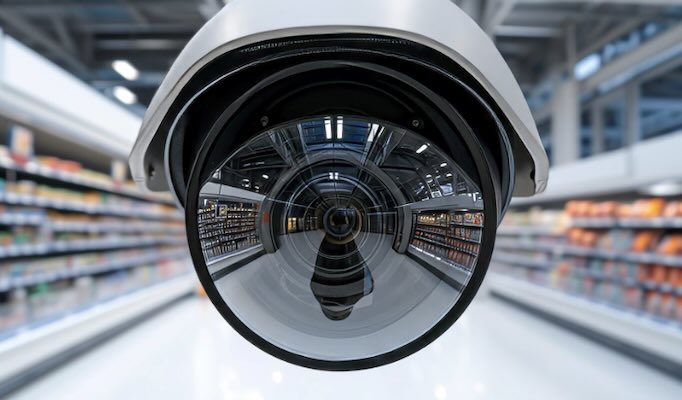
Surveillance Is Transforming Retail Loss Prevention
More Eyes, Fewer Losses: How Expanded Surveillance Is Transforming Retail Loss Prevention
By Frank Costa, President, Nexgen Protection Services
Retailers are increasingly expanding surveillance coverage to combat shrinkage and strengthen loss prevention strategies — and the data shows why this matters. With advances in real-time video monitoring, smarter camera placement, and AI-driven analytics, organizations are gaining greater visibility into suspicious behavior and inventory movement, allowing security teams to act faster and more effectively.
Strategic deployment of cameras across entrances, aisles, self-checkout stations, and high-value product zones not only deters opportunistic theft, but also helps retailers identify patterns, flag risks, and reduce blind spots that traditional systems often miss. Real-time monitoring and intelligent alerts give loss prevention teams the ability to intervene as events unfold — boosting both security and operational efficiency.
One compelling outcome of enhanced surveillance is the measurable reduction in retail shrinkage. Retailers that integrate advanced analytics into their camera ecosystems have reported significant decreases in losses — in some cases cutting shrinkage by 30% or more shortly after implementation. These smart systems also improve employee accountability and provide actionable insights for future planning, making them a core part of modern loss prevention strategies.
In today’s retail environment, more eyes truly mean smarter oversight — and when those “eyes” include AI-assisted real-time monitoring, the impact extends beyond loss prevention to create safer, more efficient stores that protect both people and profits.
References (APA 7th ed.)
Oosto. (2024). Retail loss prevention and shrinkage reduction with real-time video surveillance. https://oosto.com/use-case/loss-prevention/
Facit Analytics. (2024). CCTV video analytics retail shrinkage. https://facitanalytics.ai/insights/cctv-analytics-retail-shrinkage
#RetailSecurity #LossPrevention #Shrinkage #Surveillance #AI #RetailInnovation #RiskManagement #OperationalExcellence

Workplace Violence Is Rising — And Leaders Must Act Now
By Frank Costa, President, Nexgen Protection Services
Recent workplace safety research shows a clear upward trend in violence on the job that impacts employees across industries — from hospitality to healthcare and beyond. According to the 2025 Employee Survey Report on Workplace Violence and Safety, 30% of U.S. workers reported witnessing violence against coworkers (up from 25% in 2024), and 15% said they were directly targeted themselves — both figures showing a year-over-year increase. This trend underscores the reality that workplace violence is not only more common, it’s impacting employee wellbeing and organizational culture.
Violence at work can take many forms: physical assaults, threats, harassment, and aggressive behavior — whether between coworkers, with clients/customers, or even from outside actors. High-exposure sectors like hospitality and healthcare report particularly elevated rates of incidents.
So, what can leaders do?
- Prioritize Prevention over Reaction
Invest in comprehensive training that helps employees recognize, de-escalate, and report potential threats. Prevention must be part of the culture — not just a compliance checklist. - Improve Reporting Systems
Ensure reporting is anonymous, accessible, and non-retaliatory so employees feel safe speaking up. - Tailor Strategies to Your Workplace
Different environments pose different risks. In customer-facing roles, equip staff with conflict de-escalation training; in healthcare, integrate safety teams and early threat assessments. - Support Employee Wellbeing
Violence at work affects mental health and retention. Offer support resources and foster psychological safety alongside physical safety.
Workplace safety isn’t just HR policy — it’s a business imperative. Proactive leadership can make all the difference in keeping employees safe, respected, and able to thrive.
Reference (APA 7th ed.)
Traliant. (2025). 2025 Employee Survey Report on Workplace Violence and Safety. https://www.traliant.com/resources/2025-workplace-violence-report/
#WorkplaceSafety #EmployeeWellbeing #Leadership #HR #ViolencePrevention #OrganizationalCulture #SafetyFirst #RiskManagement