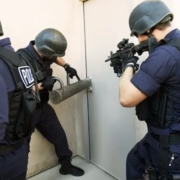

The ever-increasing threats from rising civil unrest and organized crime impact the manufacturing and industrial sector in a variety of ways. Our professionals work diligently to stay on top of these changes and develop strategic response procedures in order to minimize your potential risk and losses.

People Counting Technology Enhances Security and Provides Key Customer Insights

People Counting Technology Enhances Security and Provides Key Customer Insights

Frank Costa, President, Nexgen Protection Services, on the Need for Advanced Technology

Recent advancements in machine learning and deep learning have significantly enhanced the capabilities of video analytics, driving increased interest across industries. Along with improved accuracy and efficiency, these technologies have become more cost-effective and accessible. As a result, organizations are looking beyond traditional security applications to leverage video analytics for business optimization and operational efficiency.

People counting and crowd estimation tools initially gained traction among retailers for health and safety applications. Today, with continued technological advancements, these analytics have evolved into essential tools for a wide range of applications.

With people counting analytics, management can access actionable insights while eliminating the need for labor-intensive, manual foot traffic and occupancy tracking. Retail organizations use this data both for real-time responses and to inform strategic business decisions.

Retailers can analyze customer behavior, calculate conversion rates, and assess the ratio of visitors to actual buyers. Beyond sales and marketing insights, people counting tools also enhance store security. By analyzing historical data, management can determine peak hours and seasonal trends to optimize staffing levels.

Additionally, people counting technology enables real-time security alerts. The system can notify security teams of potential risks, such as individuals or groups spending prolonged periods unsupervised in high-value aisles. This allows management to assess whether increased monitoring or intervention is necessary.

Source:
Ebeid, N. (February 25, 2025). 3 Ways to Leverage People Counting for Operational Efficiencies. Loss Prevention Magazine.

Hashtags:
#ProtectionServices #SecurityStandards #PublicSafety #MobileSecurity #SecurityThreats

Loss Prevention Teams Seamlessly Integrate Tech, People, & Process to Mitigate Risk

Loss Prevention Teams Seamlessly Integrate Tech, People, & Process to Mitigate Risk

Frank Costa, President, Nexgen Protection Services, on the Need for Advanced Loss Prevention Strategies

Organizations today face increasing challenges related to loss prevention, operational efficiency, and data management. With the rise in organized crime, evolving compliance standards, and growing operational complexities, the need for a coordinated, comprehensive approach to loss prevention and risk management has never been more urgent.

Not only has the financial impact of organized retail crime surged in recent years, but safety concerns for both shoppers and employees have also intensified. In response, loss prevention teams are adopting a unified ecosystem that seamlessly integrates technology, personnel, and processes to mitigate risk and enhance security.

Source:
Skidmore, B. (November 14, 2024). WHITEPAPER: Holistic Loss Prevention: A People-Driven, Tech-Enabled Ecosystem. Loss Prevention Magazine.

Hashtags:
#ProtectionServices #SecurityStandards #PublicSafety #MobileSecurity #SecurityThreats


Unforeseen Threats Necessitate Enhanced Security in Educational Institutions

Unforeseen Threats Necessitate Enhanced Security in Educational Institutions

Frank Costa, President, Nexgen Protection Services, on the Need for More Robust Security in Schools

In an era of evolving threats and unforeseen challenges, ensuring the safety of students, staff, and faculty in K-12 schools is of paramount importance. Security in educational institutions must go beyond traditional measures, adopting a multilayered, multifactor approach that integrates technology, personnel training, and emergency preparedness.

K-12 security professionals can reduce risk by implementing strategies grounded in the core principles of prevention, mitigation, preparedness, response, and recovery. 

Establishing strong partnerships with local law enforcement, fire departments, and emergency medical services—both during simulations and in real-world scenarios—is essential. Collaboration ensures a swift and coordinated response in emergencies, maximizing the effectiveness of preparedness plans.

Whether it’s students remembering not to prop open exterior doors, teachers understanding the appropriate steps to take during emergencies, or school administrators managing communication with parents and first responders—everyone plays a critical role in maintaining a safe school environment.

Source:
Hanson, B. (March 24, 2025). Ballistic-Resistant Solutions for Schools: Trends and Best Practices. Security Magazine.

Hashtags:
#ProtectionServices #SecurityStandards #PublicSafety #MobileSecurity #SecurityThreats

 

Loss Prevention Strategies

Loss Prevention Strategies for Combating Organized Retail Theft

Frank Costa, President of NEXGEN Protections Services on Loss Preventions Strategies:

Organized retail theft (ORT) impacts more than just a retailer’s bottom line; it creates dangerous environments for both staff and shoppers. The increasing incidents of violence and aggression have pushed retailers to invest heavily in loss prevention strategies. In response, major retailers are partnering with technology innovators to strengthen their defenses. 

(ORT) involves coordinated efforts by professional thieves to steal large quantities of merchandise from retail stores. Unlike casual shoplifting, ORT is systematic, with stolen goods often resold through various channels, including online marketplaces. This form of theft has seen a significant rise in recent years, resulting in billions of dollars in annual losses for retailers.

Companies such as Walmart, Target, Lowe’s, Kroger, Macy’s, CVS, and others are at the forefront, using cutting-edge technology to deter and detect criminal activity. From advanced video surveillance systems to biometric cameras and autonomous security robots, retailers are deploying a formidable arsenal to combat the growing threat of ORT. Central to this technological revolution is the integration of artificial intelligence (AI), which enhances the sophistication and effectiveness of existing security measures.

Source:
Danielson, R. (February 20, 2025). Retail Resilience: Technology Strategies to Combat Organized Theft. Security Magazine.
Hashtags: #protectionservices #securitystandards #publicsafety #mobilesecurity #securitythreats


CE-Enforcement-Actions-For-Businesses-Schools-Houses-of-Worship

Guidelines for Handling ICE Enforcement Actions: For Businesses, Schools, & Houses of Worship

Frank Costa, President of NEXGEN Protection Services on ICE Enforcement Actions:

ICE raids have not been corroborated by officials. Most ICE Enforcement operations appear to have taken place in public areas, particularly locations where immigrants are known to gather, such as outside restaurants and large hardware stores where day laborers are often hired.

President Donald Trump promised a significant increase in the number of migrants detained and deported, and on the day of his inauguration, he signed several executive orders to address the issue.  The Acting Department of Homeland Security Secretary issued a directive rescinding a previous order that made sensitive areas—such as schools, churches, and hospitals—off-limits for most immigration enforcement actions.

Guidelines for Businesses Facing an ICE Enforcement Action:

  1. Record the officers’ names and badge numbers.
  2. If there is no warrant, allow agents to enter public areas of the premises. If they attempt to search nonpublic areas, inform them that you object to the search but do not physically restrain them.
  3. If the officers have a warrant, ensure it is signed by a judge and take note of any restrictions listed, such as specific places to be searched. Even with a signed warrant, a representative from the company should state that the company does not consent to the search. A company representative should follow the officers to ensure they remain within the boundaries of the warrant and document any actions that might exceed those bounds.
  4. Businesses should not assist employees who attempt to hide from officers, nor should they lie to officers or attempt to destroy or hide documents or equipment.
  5. Unlock any locked areas that are covered by the warrant if requested by the officers.
  6. Do not interfere if officers speak with employees, and do not instruct employees to avoid cooperating. However, you may inform employees that they are not required to answer officers’ questions.

The full guidance also notes that ICE may audit the business’s I-9 documentation and provides additional instructions on how to respond to such notifications.

Source:
Briscoe, S. (January 28, 2025). Companies, Schools, Houses of Worship, and Hospitals Get Advice for Handling ICE Enforcement Actions. Security Managment Magazine.


Law-Enforcement

New Framework for Law Enforcement to Make Ethical Decisions

Frank Costa, President of NEXGEN Protection Services on Law Enforcement:

Europol released a new framework designed to help law enforcement make ethical decisions regarding the incorporation of new technologies into their work.

The framework is part of the report Assessing Technologies in Law Enforcement: A Method for Ethical Decision-Making, which provides a structured approach for evaluating new technology while ensuring the preservation of public trust and the protection of fundamental rights.

The goal of the framework is to ensure that the adoption and use of new technologies align with core values such as transparency, fairness, privacy, and accountability. By implementing this structured ethical framework, Europol aims to enhance public confidence in law enforcement’s use of technology, ensuring that innovation in policing aligns with societal values and legal safeguards.

The framework outlines steps to support law enforcement in making ethically sound decisions when using innovative technology. It encourages law enforcement agencies to ask the following four questions to assess the ethical appropriateness of technology:

  1. Consistency: Is the use of the technology always appropriate under similar conditions?
  2. Dignity: Does the technology usage demonstrate that law enforcement agencies are acting in the best interest of the people, rather than using their authority solely for other objectives?
  3. Public Acceptance: Would the use of this technology be acceptable to the public if it were made generally known?
  4. Accountability: Are the necessary competencies and resources in place to take responsibility for the use of the technology?

If the answer to any of these questions is “no,” Europol recommends rejecting or modifying the use of the technology in that specific case. If the answers are affirmative, Europol suggests law enforcement agencies evaluate the potential short-term and long-term consequences of using the technology. This step helps weigh the potential impacts on all parties involved and assess any biases that might arise.

Source:
Gates, M. (February 21, 2025). Europol Publishes Framework on Ethical Use of New Technology in Law Enforcement. Security Management Magazine.


Terrorist-Organizations

The Trump Administration Designates Several Cartels as Terrorist Organizations

Frank Costa, President of NEXGEN Protection Services on Terrorist Organizations:

The Trump administration designated eight Latin American cartels as terrorist organizations on Thursday, a designation typically reserved for groups with political goals achieved through violence.

The U.S. Department of State filed the notice of the designation in The Federal Register on February 20. The action targets the following cartels:

  • Cartel del Golfo (CDG), also known as the Gulf Cartel and the Osiel Cárdenas-Guillén Organization
  • Cartel del Noreste (CDN), also known as the Northeast Cartel and Los Zetas
  • Cartel de Jalisco Nueva Generación (CJNG), also known as the Jalisco New Generation Cartel
  • Cartel de Sinaloa, also known as the Sinaloa Cartel, the Mexican Federation, and the Guadalajara Cartel
  • Carteles Unidos, also known as United Cartels, Tepalcatepec Cartel, Cartel de Tepalcatepec, the Grandfather Cartel, Cartel del Abuelo, and Cartel de Los Reyes
  • La Nueva Familia Michoacana (LNFM)
  • Mara Salvatrucha (MS-13)
  • Tren de Aragua (Aragua Train)

The eight cartels’ members are described as “foreign persons who have committed or attempted to commit, pose a significant risk of committing, or have participated in training to commit acts of terrorism that threaten the security of U.S. nationals or the national security, foreign policy, or economy of the United States,” according to the State Department filing.

Source:
Gates, M. (February 20, 2025). United States Designates 8 Cartels as Terrorist Organizations. Security Management Magazine.


security threats

Security Threats: Keeping Convenience Stores Safe

Frank Costa, President of NEXGEN Protection Services on Security Threats:

Store owners and operators often face security threats. A difficult balancing act between maintaining profits and implementing security measures—especially when the costs of security are presented alongside traditional profit generators like marketing or product stocking.

Convenience stores come in many forms, from the mom-and-pop bodega in New York City to the sleek Speedway on the side of a cross-country highway. Despite their differences, all of these stores serve millions of U.S. customers looking for a quick drink, snack, or pack of cigarettes.

Given the transient nature of the convenience store industry, it’s a business where you never know who will walk through your door at any given time. While the convenience of these stores appeals to patrons, it also attracts criminals. Thieves frequently target these locations in hopes of stealing cash and merchandise. Organized criminal groups tend to focus on items that can be resold on the black or gray market, such as cigarettes, alcohol, lottery tickets, or other popular products.

Some owners might assume that enhancing store security requires the latest (and possibly most expensive) surveillance system or locks. However, it’s essential to first assess the overall environment and understand the specific threats a store faces.

Larger companies with multiple locations, whether regionally or nationwide, often have security departments that can conduct risk assessments. Relying on these resources can help identify local crime trends and determine what factors might impact a particular store.

Source:
Mosqueda, S. (February 10, 2025). Keeping Convenience Stores Safe from Physical Threats. Security Management Magazine.


Fraud-Schemes-Continue-to-Rise

Fraud Schemes Continue to Rise

Frank Costa, President of NEXGEN Protections Services on Fraud Schemes:

Fraud remains a persistent problem that organizations continue to struggle with, including the U.S. Federal Trade Commission (FTC), one of the federal agencies tasked with addressing fraud schemes.

Below are some of the top fraud scams that affected individuals and organizations in 2024 and are likely to continue being a problem in 2025.

  1. Investment Scams
    This scam tactic has been around for ages. Fraudsters often present themselves with seemingly lucrative business opportunities that promise regular returns—if you invest immediately.
  2. Business Email Compromise (BEC)
    BEC schemes have been around since email was first introduced and typically occur in one of two ways, according to Schlereth.
    Fraudsters either spoof a legitimate email address or domain name, often adding an extra letter so the sender appears authentic at a quick glance. Alternatively, they may use social engineering to obtain an employee’s credentials and then log into the victim’s work email. CFOs and CEOs are particularly lucrative targets.
  3. Check Fraud
    What’s old is new again. Check fraud surged last year, especially after individuals posted videos on social media showing themselves writing bad checks, depositing them at ATMs, withdrawing cash before the check bounced, and sharing their behavior.
    “Fraudulently altered checks can cause significant losses to financial institutions and disrupt bank operations,” the report states. “Due to the nationwide surge in check fraud targeting U.S. mail, the Financial Crimes Enforcement Network (FinCEN) issued an alert urging financial institutions to be vigilant in identifying and reporting such activity.”
  4. Impersonation Fraud
    In this scam, criminals claim victims are suspects in financial crimes and threaten arrest or violence unless they pay the criminals. Additionally, fraudsters are impersonating customer service and tech support providers, often targeting individuals over 60 by phone. They claim that the victim’s computer has been compromised and needs immediate repair.

Source:
Gates, M. (February 1, 2025). Trend Alert: 4 Fraud Schemes to Watch in 2025. Security Management Magazine.


Security Protection

Executive Security Protection: Risks, Extremist Influencers, Shifting Tactics

Frank Costa, President of NEXGEN Protection Services on Security Protection:

Concerns about executive safety remain high. Not only was UnitedHealthcare CEO Brian Thompson tragically killed in December 2024, but there have also been multiple other incidents involving threats against business executives. Additionally, social media influencers and other sources have incited calls for similar attacks.

High-level executives without an executive security protection (EP) team are increasingly vulnerable to becoming targets.

The heightened emotional climate surrounding politics and public figures has made executive protection more challenging—and more essential. Politically motivated threats were notably higher in 2024. More than 50 members of Congress were victims of swatting attacks, and 700 members had faced threats the previous month. (Many threats were not publicly reported, so they are not included in TorchStone’s official threat count.)

Tactics are also evolving. Threat incidents are now categorized as verbal or written threats, harassment, stalking, physical attacks, and other crimes, which may include financially motivated offenses such as robberies, home invasions, and property crimes.

Source:
Gates, M. (February 5, 2025). EP Trends: Residential Risks, Extremist Influencers, Shifting Tactics. Security Management Magazine.