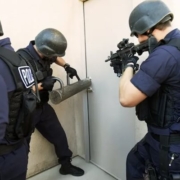
Nexgen investigators handle different assignments for different clients to include Background Checks, Criminal Checks, Witness Locates, and Evidence Retrieval or Judgment Recovery and more.

Do You Need Armed Security Guards? Here’s What to Consider

Do You Need Armed Security Guards? Here’s What to Consider

By Frank Costa, President, Nexgen Protection Services

Choosing to hire armed security guards is never a decision made lightly—nor should it be. It’s a serious move that reflects a real need for heightened protection, whether due to the nature of your business, the environment you operate in, or the level of risk you’re managing.

If you’ve determined that your property, event, or organization requires the added assurance of professionally trained, armed personnel, you’re not alone. Many business owners and individuals turn to armed security for peace of mind and enhanced deterrence. But what makes this the right choice?

Let’s take a closer look at some of the key reasons why armed security might be the right move for you:

1. Armed Presence = Powerful Deterrence

The visible presence of a firearm sends a clear message: this is not a soft target. Armed guards significantly increase the psychological barrier for would-be criminals and bad actors.

2. Regional Realities: Some Places Require More Protection

In areas where firearm ownership is high—like Texas or other open-carry states—criminals are often better armed and more brazen. It’s essential that your security team can match that threat level if needed.

3. Industry-Specific Risks

Not all sectors face the same level of threat. Armed security is often a must for businesses operating in:

  • High-crime urban areas
  • Residential properties in volatile neighborhoods
  • Nightlife venues with large crowds
  • Events involving high-profile guests or VIPs

If your business fits into one of these categories, a more tactical, armed approach may be necessary.

4. Personal Safety and Peace of Mind

Sometimes, the decision is personal. If you or your clients feel more secure knowing armed professionals are on-site, that alone can justify the investment. There’s nothing wrong with wanting maximum protection when the stakes are high.

Hiring the Right Armed Security Team

Once you’ve made the decision, the next step is finding the right team. It’s not just about hiring someone with a firearm—it’s about hiring trained, licensed, and experienced professionals who understand the responsibility that comes with carrying a weapon.

At Nexgen Protection Services, we work with clients across industries to deliver smart, strategic, and fully compliant armed security solutions tailored to your specific needs.

Safety isn’t a luxury—it’s a necessity. If you’ve determined that armed security is the right step, make sure you’re choosing partners who bring professionalism, training, and accountability to every post.

#ArmedSecurity #SecuritySolutions #HighRiskSecurity #VIPProtection #CommercialSecurity #ExecutiveProtection #SecurityGuards #TexasSecurity #NightlifeSecurity #NexgenProtection


Source:
ARMED SECURITY GUARDS FAQS. rangerguard.net.

 

Phishing Threats Are on the Rise: Organizations Must Assess Their Vulnerability

Frank Costa, President of NEXGEN Protection Services on Phishing Threats:

As AI-powered tools become more accessible, phishing threats are aon the rise. Attackers are increasingly targeting multiple channels to bypass security measures, beginning with phishing emails that contain links to video meetings featuring a deep fake.

Phishing attacks are becoming increasingly sophisticated, making it essential for organizations to assess their vulnerability. Hackers now have access to advanced AI-powered tools that enable them to craft email messages, create malicious payloads, and even generate deep fakes. These technologies—and the cyberattacks they facilitate—are more accessible than ever, particularly as cybercriminals tap into the growing “Crime as a Service” (CaaS) ecosystem. Providers now sell everything from attack tools to pre-packaged phishing kits designed to bypass native defenses and secure email gateways (SEGs).

Threat actors can leverage AI at every stage of a phishing attack, from speeding up the intelligence-gathering process on potential targets to automating the creation and distribution of highly personalized attacks. The use of AI accelerates and scales up attack creation, allowing even less-experienced cybercriminals to launch sophisticated campaigns. 

Impersonation attacks are another common tactic. The most frequent form involves attackers posing as the recipient’s company, accounting for 16% of phishing emails. The Human Resources (HR) department is often impersonated in these attacks. Cybercriminals also use platforms like LinkedIn, company websites, and news announcements to identify new hires at target organizations. These newly hired employees are then targeted in impersonation and social engineering attacks. New employees are frequently the victims of phishing emails impersonating VIPs, particularly in CEO fraud schemes.

To strengthen defenses, organizations can adopt best practices that help build a “human firewall.” The first step is to understand and communicate what constitutes normal behavior for brands and suppliers, which can aid in detecting impersonation. Organizations should also standardize and validate communication channels, especially for roles like HR and IT. Finally, companies should assess their vulnerability to supply chain and vendor-based compromises.

Source:
Alger, J. (February 20, 2025). Mobile Phishing Threats Are Evolving, According to New Research. Security Magazine.


Loss Prevention Strategies

Loss Prevention Strategies for Combating Organized Retail Theft

Frank Costa, President of NEXGEN Protections Services on Loss Preventions Strategies:

Organized retail theft (ORT) impacts more than just a retailer’s bottom line; it creates dangerous environments for both staff and shoppers. The increasing incidents of violence and aggression have pushed retailers to invest heavily in loss prevention strategies. In response, major retailers are partnering with technology innovators to strengthen their defenses. 

(ORT) involves coordinated efforts by professional thieves to steal large quantities of merchandise from retail stores. Unlike casual shoplifting, ORT is systematic, with stolen goods often resold through various channels, including online marketplaces. This form of theft has seen a significant rise in recent years, resulting in billions of dollars in annual losses for retailers.

Companies such as Walmart, Target, Lowe’s, Kroger, Macy’s, CVS, and others are at the forefront, using cutting-edge technology to deter and detect criminal activity. From advanced video surveillance systems to biometric cameras and autonomous security robots, retailers are deploying a formidable arsenal to combat the growing threat of ORT. Central to this technological revolution is the integration of artificial intelligence (AI), which enhances the sophistication and effectiveness of existing security measures.

Source:
Danielson, R. (February 20, 2025). Retail Resilience: Technology Strategies to Combat Organized Theft. Security Magazine.
Hashtags: #protectionservices #securitystandards #publicsafety #mobilesecurity #securitythreats


CE-Enforcement-Actions-For-Businesses-Schools-Houses-of-Worship

Guidelines for Handling ICE Enforcement Actions: For Businesses, Schools, & Houses of Worship

Frank Costa, President of NEXGEN Protection Services on ICE Enforcement Actions:

ICE raids have not been corroborated by officials. Most ICE Enforcement operations appear to have taken place in public areas, particularly locations where immigrants are known to gather, such as outside restaurants and large hardware stores where day laborers are often hired.

President Donald Trump promised a significant increase in the number of migrants detained and deported, and on the day of his inauguration, he signed several executive orders to address the issue.  The Acting Department of Homeland Security Secretary issued a directive rescinding a previous order that made sensitive areas—such as schools, churches, and hospitals—off-limits for most immigration enforcement actions.

Guidelines for Businesses Facing an ICE Enforcement Action:

  1. Record the officers’ names and badge numbers.
  2. If there is no warrant, allow agents to enter public areas of the premises. If they attempt to search nonpublic areas, inform them that you object to the search but do not physically restrain them.
  3. If the officers have a warrant, ensure it is signed by a judge and take note of any restrictions listed, such as specific places to be searched. Even with a signed warrant, a representative from the company should state that the company does not consent to the search. A company representative should follow the officers to ensure they remain within the boundaries of the warrant and document any actions that might exceed those bounds.
  4. Businesses should not assist employees who attempt to hide from officers, nor should they lie to officers or attempt to destroy or hide documents or equipment.
  5. Unlock any locked areas that are covered by the warrant if requested by the officers.
  6. Do not interfere if officers speak with employees, and do not instruct employees to avoid cooperating. However, you may inform employees that they are not required to answer officers’ questions.

The full guidance also notes that ICE may audit the business’s I-9 documentation and provides additional instructions on how to respond to such notifications.

Source:
Briscoe, S. (January 28, 2025). Companies, Schools, Houses of Worship, and Hospitals Get Advice for Handling ICE Enforcement Actions. Security Managment Magazine.


Terrorist-Organizations

The Trump Administration Designates Several Cartels as Terrorist Organizations

Frank Costa, President of NEXGEN Protection Services on Terrorist Organizations:

The Trump administration designated eight Latin American cartels as terrorist organizations on Thursday, a designation typically reserved for groups with political goals achieved through violence.

The U.S. Department of State filed the notice of the designation in The Federal Register on February 20. The action targets the following cartels:

  • Cartel del Golfo (CDG), also known as the Gulf Cartel and the Osiel Cárdenas-Guillén Organization
  • Cartel del Noreste (CDN), also known as the Northeast Cartel and Los Zetas
  • Cartel de Jalisco Nueva Generación (CJNG), also known as the Jalisco New Generation Cartel
  • Cartel de Sinaloa, also known as the Sinaloa Cartel, the Mexican Federation, and the Guadalajara Cartel
  • Carteles Unidos, also known as United Cartels, Tepalcatepec Cartel, Cartel de Tepalcatepec, the Grandfather Cartel, Cartel del Abuelo, and Cartel de Los Reyes
  • La Nueva Familia Michoacana (LNFM)
  • Mara Salvatrucha (MS-13)
  • Tren de Aragua (Aragua Train)

The eight cartels’ members are described as “foreign persons who have committed or attempted to commit, pose a significant risk of committing, or have participated in training to commit acts of terrorism that threaten the security of U.S. nationals or the national security, foreign policy, or economy of the United States,” according to the State Department filing.

Source:
Gates, M. (February 20, 2025). United States Designates 8 Cartels as Terrorist Organizations. Security Management Magazine.


Incident Report

Well-Written Incident Reports: An Essential Element of Effective Public-Private Partnerships

Frank Costa, President NEXGEN Protection Services —

Receiving well-written, complete, and timely incident reports from private security partners is a critical aspect of any case. While verbal witness statements can be helpful, they do not provide the level of detail that investigators need to understand the full scope of a case.

In recent years, there has been growing emphasis on the importance of effective partnerships between private security and public law enforcement. As the demands on law enforcement increase alongside recruiting challenges and shrinking budgets, private security will inevitably take on more responsibilities traditionally handled by public agencies.

With law enforcement struggling to meet the rising demand for their services and facing a shortage of new officers, the burden of safety and security falls increasingly on private security personnel. This shift means that private security must excel in all aspects of their role. One core requirement is proficiency in writing comprehensive and factual Case Incident Reports (CIRs).

Furthermore, the ability of private security officers to write clear and effective reports becomes especially crucial when facing legal challenges. In the eyes of the court, if an event isn’t documented, it essentially didn’t happen.


Source:
Conley, T. (January 20, 2025). Well-Written Incident Reports Are an Essential Element of Effective Public-Private Partnerships. Security Management Magazine.

Why Does the Public Feel Unsafe and Have No Privacy?

Why Does the Public Feel Unsafe and Have No Rights?

Frank Costa, President, Nexgen Protection Services

People want to feel safe without the discomfort of being constantly monitored, which presents a challenge for security leaders who must continue prioritizing safety while respecting privacy.

Privacy Concerns:

Modern individuals place a high value on privacy and often feel uneasy when security measures appear overly focused on surveillance, such as excessive camera monitoring or intrusive personal checks.

Subtle Security:

Security leaders must focus on methods that provide protection without being overtly noticeable. By doing so, they can create a more comfortable experience for individuals while still ensuring safety.

Creative Solutions:

This can involve the use of technology such as smart sensors that activate only when necessary, discreet security personnel, or designing spaces in a way that naturally promotes safety without feeling oppressive or invasive.

Source:
(2025, Jan 09). Navigating Surveillance: Balancing Security and Privacy. Security Magazine.

Hashtags: #protectionservices #securitystandards #publicsafety #mobilesecurity #securitythreats


How Security Is Shaping the Cannabis Industry

How Security Is Shaping the Cannabis Industry

Frank Costa, President, Nexgen Protection Services

A surveillance system can help protect your business from theft, particularly employee theft, which is a widespread issue in the cannabis industry. For large outdoor growing operations, having a monitoring system in place provides peace of mind by securing your property from all angles at all times.

Source:
Baxter, K. (2025, January 13). How security is shaping the cannabis industry. Security InfoWatch.

#protectionservices #securitystandards #publicsafety #mobilesecurity #securitythreats


Remote Video Monitoring: The Future of Security for Businesses

Remote Video Monitoring: The Future of Security for Businesses

Frank Costa, President, Nexgen Protection Services

The future of security isn’t just on our doorstep — it’s breaking down the front door.
The security industry has experienced unprecedented advancements in technology and public policy, reshaping the way we approach safety and protection. And this rapid pace of change shows no signs of slowing.

Remote video monitoring (RVM) is poised to become a non-negotiable security tool for businesses — and soon, for homes.

2025 is not just about better security; it’s about smarter, proactive protection. RVM will be at the center of this shift.

This innovative approach addresses the limitations of on-site security guards and traditional surveillance systems. By integrating AI into RVM, businesses can mitigate human error, significantly reduce costs, and set new industry standards. Those who harness the power of AI for RVM will be well-positioned to thrive in this new era.


SOURCE: 

Selinger, D. 2025 will mark a turning point in physical security tech. Here’s why. Deep Sentinel, 12/20/2024.
#protectionservices #securitystandards #publicsaftey  #mobilesecurity #securitythreats


Supply Chain Attacks: Exploiting Third-Party Vulnerabilities

Supply Chain Attacks: Exploiting Third-Party Vulnerabilities

Frank Costa, President, Nexgen Protection Services

The cybersecurity landscape continues to evolve at an unprecedented pace. With the rise of sophisticated attack methods, the integration of new technologies, and increasing connectivity across sectors, businesses are facing more complex cybersecurity threats than ever before. Staying informed and prepared is critical to protecting data, maintaining trust, and ensuring business continuity.

Supply Chain Attacks

As businesses increasingly rely on external vendors and partners, supply chain attacks have become a significant cybersecurity concern. In these attacks, threat actors infiltrate a company’s system by compromising a third-party provider, gaining access to multiple organizations through a single vulnerability.

How to Prepare:

  • Vendor Risk Assessments: Conduct thorough security assessments for all vendors and partners to identify potential vulnerabilities.
  • Contractual Security Requirements: Include cybersecurity clauses in vendor contracts to ensure security standards are upheld.
  • Network Segmentation: Isolate critical systems from external partners to prevent attackers from moving freely within your network.
  • Continuous Monitoring: Use real-time monitoring to track vendor activity and detect any unusual behavior early.


SOURCE: 

Top Cybersecurity Threats to Watch in 2025: How Businesses Can Prepare, Boston Institute of Analytics, 11/14/2024.
#protectionservices #securitystandards #publicsaftey  #mobilesecurity #securitythreats