
Posts

Security That Builds Trust

Security That Builds Trust

Frank Costa, President, Nexgen Protection Services

Trust. True security is not defined by presence alone—it is defined by professionalism, reliability, rapid response, and the consistent confidence that people, property, and operations are protected at all times. In today’s environment, effective security requires trained personnel who understand that every patrol, inspection, and interaction plays a role in preventing incidents before they occur.

At the core of security guard and patrol services is a commitment to disciplined execution and attention to detail. Our trained security personnel work across diverse environments including businesses, residential communities, construction sites, retail locations, and private properties. Each setting presents unique risks, and each requires a proactive approach to visibility, deterrence, and communication.

Security is more than standing watch. It is about actively identifying risks, monitoring activity patterns, and responding quickly and appropriately when situations arise. This level of readiness helps reduce vulnerabilities while creating safer, more stable environments for employees, residents, customers, and visitors.

Strong security operations also build trust. Through consistent visibility, clear communication, and dependable service, security professionals reinforce a sense of safety that allows organizations and communities to function with confidence.

According to the U.S. Department of Homeland Security, effective protective services rely on visible deterrence, rapid response capability, and layered risk management strategies to reduce threats and improve safety outcomes (U.S. Department of Homeland Security, 2023).

When security is done right, it is not just seen—it is felt.

#SecurityServices #SecurityGuards #PatrolServices #PrivateSecurity #RiskManagement #PublicSafety #WorkplaceSafety #LossPrevention #FacilitySecurity #CrimePrevention #SecurityProfessionals #NexgenProtection

Reference
U.S. Department of Homeland Security. (2023). Protective security and risk management principles. DHS Protective Security


 

De-Escalation Saves Lives

De-Escalation Saves Lives

By Frank Costa, President, Nexgen Protection Services

In healthcare environments, “Code White” is a term staff use when calling for assistance during incidents involving aggressive patients or residents. These situations require more than a rapid response—they require professionalism, emotional intelligence, and a strong focus on de-escalation.

Regardless of the reason a security team is called, establishing rapport is one of the most important first steps. The presence of a uniform can set the tone immediately, especially for individuals who may have had prior negative experiences with authority figures. That initial interaction can either escalate tension or help restore calm.

Protection services within healthcare settings are unique because they extend beyond traditional security functions. There is often a strong emphasis on patient-centered care, where officers can support nursing staff by assisting with non-clinical needs—such as providing comfort items like blankets, offering directions, or helping patients understand available resources upon discharge.

This supportive role helps reduce pressure on clinical teams while improving the overall patient experience. Most importantly, the goal is always de-escalation. Preventing escalation protects patients, staff, and visitors while maintaining a safe and respectful environment for care delivery.

According to the U.S. Department of Health and Human Services, effective workplace violence prevention in healthcare relies heavily on early intervention, communication, and de-escalation strategies to reduce risk and improve outcomes (U.S. Department of Health and Human Services, 2023).

Safety and compassion must work together in healthcare security.

#HealthcareSecurity #DeEscalation #PatientSafety #WorkplaceSafety #HospitalSecurity #SecurityServices #PublicSafety #RiskManagement #HealthcareWorkers #CrisisIntervention #NexgenProtection #SafetyFirst

Reference
U.S. Department of Health and Human Services. (2023). Workplace violence prevention in healthcare settings. HHS Workplace Violence Prevention


New Executive Protection Standard

New Executive Protection Standard

By Frank Costa, President, Nexgen Protection Services

SIS International has introduced a groundbreaking executive protection standard designed to address the growing complexity and sophistication of threats facing today’s corporate leaders. As risks continue to evolve across physical, digital, and reputational domains, security professionals must operate within a clear, consistent, and highly disciplined framework.

This new standard provides executive protection professionals with structured guidance to deliver world-class protection services while maintaining the highest levels of professionalism, accountability, and operational consistency. It emphasizes proactive threat assessment, intelligence-led planning, and coordinated response strategies that support both safety and continuity of business operations.

Modern executive protection is no longer limited to physical escort or visible deterrence. It requires a comprehensive approach that integrates situational awareness, risk forecasting, communication protocols, and cross-functional coordination with internal stakeholders and external agencies when necessary.

By establishing unified best practices, SIS International aims to elevate industry expectations and ensure that protection services remain adaptive to emerging threats. This framework supports a higher level of readiness for security professionals tasked with safeguarding executives in increasingly unpredictable environments.

According to the U.S. Department of Homeland Security, effective protective security programs rely on standardized procedures, intelligence integration, and layered mitigation strategies to reduce exposure to risk (U.S. Department of Homeland Security, 2023).

As the threat landscape evolves, so must the standards that define protection.

#ExecutiveProtection #SecurityStandards #RiskManagement #CorporateSecurity #ProtectiveServices #ThreatAssessment #SecurityProfessionals #IntelligenceLedSecurity #WorkplaceSafety #PrivateSecurity #SecurityLeadership #SISInternational

Reference
U.S. Department of Homeland Security. (2023). Protective security frameworks and risk mitigation strategies. DHS Protective Security


Financial Security Builds Trust

Financial Security Builds Trust

By Frank Costa, President, Nexgen Protection Services

Security within financial institutions extends far beyond preventing theft. Modern banks and commercial financial facilities must also prioritize customer safety, employee protection, controlled access, and rapid, coordinated incident response. As threats continue to evolve, so must the strategies used to manage risk and maintain operational stability.

For Vice Presidents of Operations, branch managers, and corporate loss prevention teams, visible on-site security is a critical component of a strong risk management framework. A professional security presence not only deters unwanted activity but also reinforces confidence among customers and staff during daily operations and peak transaction periods.

Trained security officers support financial environments by monitoring entry points, observing suspicious behavior, assisting with incident documentation, and providing immediate response capabilities when situations escalate. Their role is especially important in high-traffic branches where quick decision-making and clear communication can reduce disruption and enhance safety outcomes.

In industries built on trust and reliability, physical security remains a key factor in maintaining customer confidence and protecting organizational reputation. Technology and surveillance systems enhance awareness, but human judgment and presence remain essential for effective protection.

Strong financial institutions invest in layered security strategies that combine people, processes, and technology to ensure resilience and continuity.

Looking to strengthen security at your financial facility?

#FinancialSecurity #BankSecurity #LossPrevention #RiskManagement #PrivateSecurity #WorkplaceSafety #CustomerSafety #EmployeeProtection #SecurityServices #OperationalExcellence #FraudPrevention #FacilitySecurity

Reference
Federal Deposit Insurance Corporation. (2023). Bank security and risk management practices. FDIC Security Guidelines

Protecting People Starts Before the Threat: Creating Safer Spaces Every Day

Protecting People Starts Before the Threat: Creating Safer Spaces Every Day

Frank Costa, President, Nexgen Protection Services

Safety is not something organizations can afford to think about only after an incident occurs. Effective protection begins at the front entrance with proactive planning, visible deterrence, and trained professionals who understand how to respond in real time.

From walkthrough metal detectors at schools, government buildings, healthcare facilities, and public events to professional on-site security personnel for hospitals and medical offices, security measures play a critical role in protecting employees, visitors, students, and the public.

At Nexgen Protection Group, trained security professionals help create safer environments through threat deterrence, activity monitoring, controlled access, and a strong visible presence when protection matters most. A proactive security strategy not only reduces risk exposure but also helps foster confidence and peace of mind for everyone entering a facility.

According to the Occupational Safety and Health Administration (OSHA), workplace violence prevention and strong security protocols are essential components of maintaining safe working environments, particularly in healthcare and public-facing industries (Occupational Safety and Health Administration [OSHA], 2024).

Security. Protection. Peace of Mind.

#Security #SafetyFirst #HealthcareSecurity #SchoolSafety #ProtectionServices #SecurityGuards #PublicSafety #RiskManagement #WorkplaceSafety #FacilitySecurity #EventSecurity #NCProtectionGroup

Reference
Occupational Safety and Health Administration. (2024). Workplace violence. U.S. Department of Labor. OSHA Workplace Violence Prevention


When-Every-Camera-Becomes-a-Battlefield-Sensor.

Security Cameras are Battlefield Sensors

Security Cameras are Battlefield Sensors

By Frank Costa, President, Nexgen Protection Services

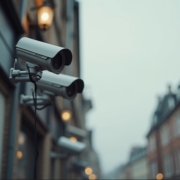
Security cameras were once seen as passive tools for safety and deterrence. Today, they are increasingly part of a much larger—and more complex—global security picture.

Reports from modern conflict zones show how unsecured surveillance systems, including street and infrastructure cameras, can be exploited to gain real-time visibility into environments. In some cases, these feeds have been used to support targeting decisions, assess operational outcomes, and inform follow-on actions. The implication is clear: connected devices can become intelligence assets—whether intended or not.

This reality highlights why hiring a professional security protection team is no longer optional for high-risk environments.

A modern protection team doesn’t just “monitor cameras.” They secure the entire ecosystem—ensuring surveillance systems are properly configured, access-controlled, encrypted, and continuously assessed for vulnerabilities. They also integrate physical security operations with cyber hygiene practices to reduce the risk of external exploitation.

Beyond technology, trained security professionals bring critical judgment. They can identify suspicious network behavior, respond to potential compromises, and coordinate with technical and operational stakeholders in real time.

In today’s environment, security is no longer just about visibility—it’s about control, integrity, and resilience across both physical and digital domains.

APA Source:
U.S. Department of Defense. (2024). Emerging threats in contested environments: Surveillance systems, cyber exploitation, and operational security risks.

#CyberSecurity #PhysicalSecurity #RiskManagement #SurveillanceSecurity #ExecutiveProtection #CriticalInfrastructure #ThreatIntelligence #SecurityStrategy #DefenseInnovation #OperationalSecurity


Trust.-Why-Human-Security-Expertise-Still-Matters

Trust in the Age of AI: Why Human Security Expertise Still Matters

Human Security Expertise Still Matters.

By Frank Costa, President, Nexgen Protection Services

Trust is the most valuable currency in the security industry—especially as artificial intelligence (AI) rapidly evolves. While AI-driven tools are transforming surveillance, analytics, and threat detection, they also introduce new questions around reliability, privacy, and decision-making.

This is where hiring a professional security protection team becomes essential.

AI can process data, but trained security professionals provide context, judgment, and accountability. A dedicated protection team ensures that technology is used effectively—interpreting alerts, validating threats, and making real-time decisions that machines alone cannot handle. They also bridge the trust gap, offering a human presence that reassures employees, executives, and clients.

Beyond technology oversight, these teams conduct risk assessments, manage crisis response, and adapt quickly to evolving threats—whether physical or digital. In an era where AI can both enhance and complicate security operations, the combination of advanced tools and experienced personnel creates a stronger, more resilient defense.

As innovation accelerates, trust will define the future of security. And trust is built by people.

APA Source:
ISC West. (2024). Emerging trends in security: AI, trust, and the role of human expertise.

#SecurityIndustry #ArtificialIntelligence #ExecutiveProtection #CorporateSecurity #RiskManagement #TrustMatters #SecurityStrategy #ISCWest #Innovation #HumanInTheLoop


High-Tech-Auto-theft.-Gone-in-60-Seconds.

High-Tech Auto theft – Gone in 60 Seconds.

Frank Costa, President, Nexgen Protection Services

Gone in 60 Seconds. That’s the reality of today’s organized, high-tech auto theft rings. In recent cases, more than 100 vehicles were stolen across multiple states, quickly moved through coordinated networks, and shipped overseas—often hidden in containers falsely labeled as household goods. This isn’t random crime; it’s fast, strategic, and highly profitable.

For businesses, executives, and fleet owners, this highlights a critical point: reactive security is no longer enough. Proactive protection is essential.

Hiring a professional security protection team adds layers of defense that technology alone can’t provide. Trained personnel conduct risk assessments, monitor vulnerable access points, coordinate surveillance systems, and respond in real time. They also help implement deterrence strategies—because a visible security presence can significantly reduce targeting.

Beyond prevention, these teams support incident response, documentation, and coordination with law enforcement—reducing downtime, financial loss, and operational disruption. For companies managing vehicle fleets or high-value assets, this isn’t just about safety—it’s about continuity and protecting your bottom line.

Organized crime is evolving. Your security strategy should too.

APA Source:
United States Department of Justice. (2024). Multi-state auto theft ring dismantled; vehicles trafficked overseas.

#SecurityMatters #RiskManagement #AssetProtection #CorporateSecurity #BusinessContinuity #FleetManagement #CrimePrevention #ExecutiveProtection #PhysicalSecurity #SecurityStrategy


Digital Threats

The Digital Threats You Can’t Afford to Ignore

The Digital Threats You Can’t Afford to Ignore — And How to Stay Ahead

Cybercrime isn’t slowing down — it’s getting smarter. The good news? So can we.

By Frank Costa, President, Nexgen Protection Services

Here’s what everyone should know right now:

  • The #1 Venmo Scam
    Fraudsters are exploiting “accidental payment” schemes — sending money, claiming it was a mistake, then asking you to return it before the original transfer is reversed. Never send money back without confirming directly inside the app and contacting support.

  • The Biggest Mistake Almost Everyone Makes Online
    Reusing passwords. One breach = access to multiple accounts. Use a password manager and enable multi-factor authentication (MFA) everywhere possible.

  • If Your Phone Is Lost or Stolen – Act immediately:
    1️Lock the device remotely
    2️Change critical passwords (email first)
    3️Contact your carrier
    4️Monitor financial accounts

    Your phone is a digital master key — treat it that way.

  • How to Freeze Your Credit (And Why You Should)
    A credit freeze prevents new accounts from being opened in your name. It’s free and can be temporarily lifted when needed. This is one of the strongest identity theft prevention steps available.

  • The Fastest Way to Spot Scams
    Look for urgency + emotion.
    “Act now.” “Your account will be closed.” “You’re in trouble.”
    Scammers rely on panic. Pause. Verify independently. Never click links from unsolicited messages.

This isn’t about fear. It’s about preparation.

Because digital mistakes can be instant — but recovery can take years.

#CyberSecurity #FraudPrevention #IdentityTheft #OnlineSafety #ScamAwareness #DigitalSecurity #RiskManagement #PersonalSecurity

retail loss prevention

Surveillance Is Transforming Retail Loss Prevention

More Eyes, Fewer Losses: How Expanded Surveillance Is Transforming Retail Loss Prevention

By Frank Costa, President, Nexgen Protection Services

Retailers are increasingly expanding surveillance coverage to combat shrinkage and strengthen loss prevention strategies — and the data shows why this matters. With advances in real-time video monitoring, smarter camera placement, and AI-driven analytics, organizations are gaining greater visibility into suspicious behavior and inventory movement, allowing security teams to act faster and more effectively.

Strategic deployment of cameras across entrances, aisles, self-checkout stations, and high-value product zones not only deters opportunistic theft, but also helps retailers identify patterns, flag risks, and reduce blind spots that traditional systems often miss. Real-time monitoring and intelligent alerts give loss prevention teams the ability to intervene as events unfold — boosting both security and operational efficiency.

One compelling outcome of enhanced surveillance is the measurable reduction in retail shrinkage. Retailers that integrate advanced analytics into their camera ecosystems have reported significant decreases in losses — in some cases cutting shrinkage by 30% or more shortly after implementation. These smart systems also improve employee accountability and provide actionable insights for future planning, making them a core part of modern loss prevention strategies.

In today’s retail environment, more eyes truly mean smarter oversight — and when those “eyes” include AI-assisted real-time monitoring, the impact extends beyond loss prevention to create safer, more efficient stores that protect both people and profits.

References (APA 7th ed.)
Oosto. (2024). Retail loss prevention and shrinkage reduction with real-time video surveillance. https://oosto.com/use-case/loss-prevention/
Facit Analytics. (2024). CCTV video analytics retail shrinkage. https://facitanalytics.ai/insights/cctv-analytics-retail-shrinkage

#RetailSecurity #LossPrevention #Shrinkage #Surveillance #AI #RetailInnovation #RiskManagement #OperationalExcellence