
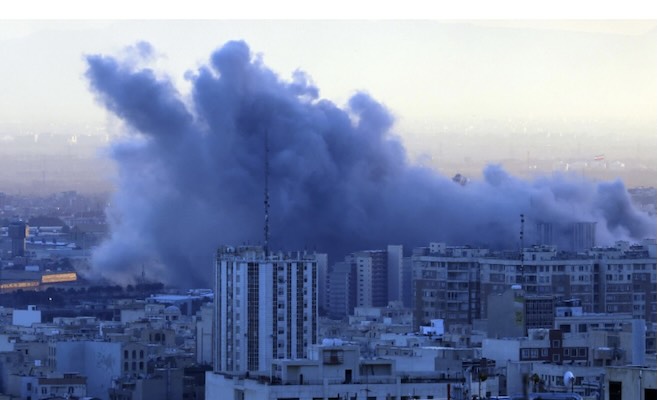
Rising U.S. Threats Amid Iran Conflict
By Frank Costa, President, Nexgen Protection Services — Rising U.S. Threats
The evolving Iran-region conflict is no longer a distant geopolitical issue—it is actively shaping the threat environment inside the United States.
According to the Department of Homeland Security (DHS), ongoing tensions have created a heightened threat landscape, with increased risks spanning both cyber and physical domains. Pro-Iranian cyber actors and hacktivist groups are expected to conduct attacks against U.S. networks, ranging from disruption to more targeted operations.
At the same time, DHS warns of a more unpredictable danger: individuals or small groups within the U.S. who may become inspired by overseas events. These actors can mobilize quickly, often without direct coordination, making them harder to detect and prevent.
Recent large-scale strikes in early 2026 have only intensified these risks. Cyber incidents linked to Iran-aligned groups and rising concerns about retaliatory activity highlight how global conflict increasingly translates into domestic exposure.
For businesses and security leaders, this shift is critical. The line between international conflict and domestic risk is thinner than ever. Organizations must strengthen cyber defenses, monitor threat intelligence, and prepare for a broader spectrum of potential incidents—from digital disruption to ideologically motivated violence.
The takeaway to rising U.S. threats is clear: geopolitical awareness is now a core component of enterprise security strategy. What happens overseas can—and increasingly does—impact operations at home.
Reference (APA):
U.S. Department of Homeland Security. (2025). National Terrorism Advisory System Bulletin: Summary of the threat to the United States.
#SecurityThreats #CyberSecurity #RiskManagement #HomelandSecurity #ThreatIntelligence #BusinessContinuity #NationalSecurity #CorporateSecurity #Geopolitics #2026Trends

Border Security Risks Are Rising in 2026
By Frank Costa, President, Nexgen Protection Services
Boarder Security Risks
Violence near the U.S.–Mexico border is escalating in ways that demand urgent attention from businesses, security leaders, and policymakers alike.
Criminal organizations are no longer relying solely on traditional tactics. Increasingly, they are deploying advanced methods—such as drone-dropped explosives and improvised explosive devices (IEDs)—to expand their reach and capabilities. These developments signal a shift toward more sophisticated, asymmetric threats that were once largely confined to conflict zones.
For organizations operating in border states or along key supply chain corridors, the implications are serious. The security risk is no longer isolated—it has the potential to spill over into U.S. communities, impacting personnel safety, logistics, and overall business continuity.
This evolving threat landscape requires a more proactive and intelligence-driven approach to security risk assessment. Companies should reassess risk exposure, strengthen coordination with local and federal authorities, and ensure that their security partners are equipped to respond to emerging, high-impact scenarios.
Preparedness is no longer optional—it’s a strategic necessity.
Reference (APA):
Congressional Research Service. (2025). Mexico: Organized crime and drug trafficking organizations.
#BorderSecurity #RiskManagement #SecurityThreats #ExecutiveProtection #BusinessContinuity #CorporateSecurity #SupplyChainRisk #SecurityIndustry #ThreatIntelligence #2026Trends

Security Trends in 2026 You Can’t Ignore
Frank Costa, President, Nexgen Protection Services
As 2026 unfolds, the security industry is undergoing a major shift—and businesses that fail to adapt may find themselves exposed in ways they didn’t anticipate.
Three trends are redefining how organizations approach protection:
First, demand for executive protection is surging. With a 28% increase, safeguarding C-suite leaders and high-profile talent is no longer optional—it’s a critical layer of risk management in an increasingly unpredictable world.
Second, compliance requirements are tightening across states like California, Texas, and New York. Navigating multi-state regulations is becoming more complex, making it essential to partner with a fully licensed provider that understands the legal landscape and ensures seamless coverage.
Third, expectations around response times have fundamentally changed. Clients are no longer satisfied with reactive services. They expect proactive strategies, real-time intelligence, and rapid response capabilities. The difference between reacting to a threat and preventing one can define outcomes.
The bottom line: security is no longer just a service—it’s a strategic function. Businesses that prioritize proactive, compliant, and comprehensive protection will be better positioned to navigate the risks ahead.
Reference (APA):
Allied Universal. (2025). World security report 2025–2026: Key trends shaping the future of security.
#SecurityTrends #ExecutiveProtection #RiskManagement #Compliance #BusinessSecurity #PhysicalSecurity #SecurityIndustry #LeadershipProtection #CorporateSecurity #2026Trends