
Posts

Security-in-a-Challenging-Economy-From-Cost-Center-to-Critical-Investment

Security in a Challenging Economy: From Cost Center to Critical Investment

Security: a Critical Investment 

By Frank Costa, President, Nexgen Protection Services

In today’s challenging economy, prioritizing security isn’t optional—it’s essential. As theft, fraud, and opportunistic crime increase during periods of financial strain, organizations are realizing that proactive protection is a core part of operational resilience.

Hiring a professional security protection team is one of the most effective ways to strengthen that resilience.

Rather than relying on reactive measures after an incident occurs, protection teams focus on prevention. They identify vulnerabilities in physical spaces, monitor high-risk areas, and implement layered deterrence strategies that reduce the likelihood of theft and disruption in the first place.

In addition, trained security professionals provide rapid incident response when issues do arise—minimizing losses, protecting personnel, and preserving business continuity. Their presence also acts as a visible deterrent, which can significantly reduce opportunistic targeting.

In tighter economic conditions, the cost of not investing in security often outweighs the cost of prevention. Downtime, inventory loss, liability exposure, and reputational damage can have long-term financial consequences.

Strong security is not just about protection—it’s about stability, confidence, and continuity in uncertain times.

APA Source:
National Retail Federation. (2024). Retail security and loss prevention report: Trends in theft and proactive risk mitigation strategies.

#SecurityManagement #RiskManagement #LossPrevention #CorporateSecurity #BusinessContinuity #AssetProtection #TheftPrevention #SecurityStrategy #RetailSecurity #OperationalResilience


Real-Security-vs.-The-Illusion-of-Protection

Real Security versus the Illusion of Protection

Real Security versus the Illusion of Protection

By Frank Costa, President, Nexgen Protection Services

There is still a common misconception in the general public that security simply means “walking around and calling the police when something happens.” In reality, that approach reflects a limited, reactive model—not a true security strategy.

When security personnel are untrained, under-resourced, or not integrated into a broader risk framework, organizations may appear protected, but are often only experiencing the illusion of protection. Incidents are not prevented—they are merely reported after the fact.

It is important to recognize that this is often a systems problem, not an individual officer problem. Without proper training, clear protocols, intelligence support, and operational authority, even well-intentioned personnel are constrained in their ability to act effectively.

A professional security protection team changes this dynamic.

Modern protection teams are built around prevention, preparedness, and response capability. They are trained to assess risk in real time, de-escalate situations, coordinate emergency response, and integrate with law enforcement when necessary—rather than relying on it as the first and only option.

Organizations that invest in competent, structured security programs move from passive observation to active risk management. That shift is what creates real protection—not just the appearance of it.

Real security is not a uniform. It is a capability.

APA Source:
ASIS International. (2023). Security services standards: Professional competencies and effective incident response in private security operations.

#SecurityManagement #RiskManagement #CorporateSecurity #ExecutiveProtection #LossPrevention #SecurityStrategy #CrisisResponse #WorkplaceSafety #ProfessionalSecurity #BusinessContinuity


When-Every-Camera-Becomes-a-Battlefield-Sensor.

Security Cameras are Battlefield Sensors

Security Cameras are Battlefield Sensors

By Frank Costa, President, Nexgen Protection Services

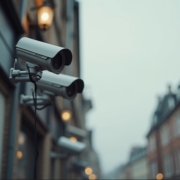
Security cameras were once seen as passive tools for safety and deterrence. Today, they are increasingly part of a much larger—and more complex—global security picture.

Reports from modern conflict zones show how unsecured surveillance systems, including street and infrastructure cameras, can be exploited to gain real-time visibility into environments. In some cases, these feeds have been used to support targeting decisions, assess operational outcomes, and inform follow-on actions. The implication is clear: connected devices can become intelligence assets—whether intended or not.

This reality highlights why hiring a professional security protection team is no longer optional for high-risk environments.

A modern protection team doesn’t just “monitor cameras.” They secure the entire ecosystem—ensuring surveillance systems are properly configured, access-controlled, encrypted, and continuously assessed for vulnerabilities. They also integrate physical security operations with cyber hygiene practices to reduce the risk of external exploitation.

Beyond technology, trained security professionals bring critical judgment. They can identify suspicious network behavior, respond to potential compromises, and coordinate with technical and operational stakeholders in real time.

In today’s environment, security is no longer just about visibility—it’s about control, integrity, and resilience across both physical and digital domains.

APA Source:
U.S. Department of Defense. (2024). Emerging threats in contested environments: Surveillance systems, cyber exploitation, and operational security risks.

#CyberSecurity #PhysicalSecurity #RiskManagement #SurveillanceSecurity #ExecutiveProtection #CriticalInfrastructure #ThreatIntelligence #SecurityStrategy #DefenseInnovation #OperationalSecurity


Lessons in Security

When Home Isn’t Safe: Lessons in Security

Lessons in Security.

A mother in Chicago experienced every homeowner’s nightmare: strangers had taken over her first-floor apartment—allegedly even using her bed. The individuals, a 46-year-old woman and a 63-year-old man, were cited for trespassing, but the impact went far beyond legal action.

By Frank Costa, President, Nexgen Protection Services

The incident highlights critical concerns about access control, and tenant protection. How could unknown individuals gain entry so easily? And more importantly, how can residents feel safe in their own homes?

Beyond the shock, this event forced the mother to relocate from her own apartment, underscoring the profound emotional and practical consequences of breaches. Stories like these are sparking conversations across Chicago—and nationwide—about the importance of proactive measures in multi-unit housing.

Effective strategies include:

  • Controlled building access – key cards, secure locks, and visitor verification.
  • Surveillance systems – cameras in common areas and entry points.
  • Tenant awareness and training – knowing how to report suspicious activity quickly.
  • Rapid response protocols – ensuring local authorities or building team can act immediately.

Protection isn’t just a convenience—it’s fundamental to peace of mind, safety, and community well-being. Residents deserve to feel protected in their homes, and building management teams must take these incidents seriously to prevent recurrence.

Reference (APA):
FOX Local. (2026, March 20). Chicago mother discovers strangers in her apartment.

#HomeSecurity #TenantProtection #RiskManagement #BuildingSecurity #ResidentialSafety #CrimePrevention #PhysicalSecurity #CommunitySafety #SecurityStrategy #Awareness

Integrated Security

Integrated Security is Transforming the U.S. Homeland

The U.S. security services market, valued at $48.8 billion, is undergoing a fundamental shift. Organizations are no longer viewing physical security, investigations, and cyber defense as separate functions—they are increasingly integrated into a unified approach to risk management.

By Frank Costa, President, Nexgen Protection Services — Integrated Security 

This integration provides several advantages:

  • Holistic threat detection: Combining physical and cyber intelligence allows organizations to identify vulnerabilities that might otherwise go unnoticed.
  • Faster incident response: Coordinated teams can act immediately across multiple domains, reducing the impact of both physical and digital threats.
  • Streamlined investigations: Unified data and reporting systems improve the efficiency and effectiveness of post-incident analysis.

As threats evolve, from cyber intrusions to insider risks and physical breaches, clients are demanding security solutions that are proactive, comprehensive, and interoperable. Providers that can seamlessly merge these disciplines are capturing market share and redefining industry standards.

For businesses, the takeaway is clear: investing in integrated security is no longer optional. The most effective strategies combine technology, personnel, and intelligence to anticipate, deter, and respond to risks across every potential front.

The transformation of the $48.8 billion security market reflects a broader truth: in today’s complex threat environment, security works best when it works together.

Reference (APA):
IBISWorld. (2026). Security services in the US: Market research report.

#SecurityIndustry #IntegratedSecurity #RiskManagement #CyberSecurity #PhysicalSecurity #Investigations #BusinessContinuity #ThreatPrevention #CorporateSecurity #SecurityTrends

Rising U.S. Threats Amid Iran Conflict

Rising U.S. Threats Amid Iran Conflict

By Frank Costa, President, Nexgen Protection Services — Rising U.S. Threats 

The evolving Iran-region conflict is no longer a distant geopolitical issue—it is actively shaping the threat environment inside the United States.

According to the Department of Homeland Security (DHS), ongoing tensions have created a heightened threat landscape, with increased risks spanning both cyber and physical domains. Pro-Iranian cyber actors and hacktivist groups are expected to conduct attacks against U.S. networks, ranging from disruption to more targeted operations. 

At the same time, DHS warns of a more unpredictable danger: individuals or small groups within the U.S. who may become inspired by overseas events. These actors can mobilize quickly, often without direct coordination, making them harder to detect and prevent. 

Recent large-scale strikes in early 2026 have only intensified these risks. Cyber incidents linked to Iran-aligned groups and rising concerns about retaliatory activity highlight how global conflict increasingly translates into domestic exposure. 

For businesses and security leaders, this shift is critical. The line between international conflict and domestic risk is thinner than ever. Organizations must strengthen cyber defenses, monitor threat intelligence, and prepare for a broader spectrum of potential incidents—from digital disruption to ideologically motivated violence.

The takeaway to rising U.S. threats is clear: geopolitical awareness is now a core component of enterprise security strategy. What happens overseas can—and increasingly does—impact operations at home.

Reference (APA):
U.S. Department of Homeland Security. (2025). National Terrorism Advisory System Bulletin: Summary of the threat to the United States.

#SecurityThreats #CyberSecurity #RiskManagement #HomelandSecurity #ThreatIntelligence #BusinessContinuity #NationalSecurity #CorporateSecurity #Geopolitics #2026Trends

Border Security Risks Are Rising in 2026

Border Security Risks Are Rising in 2026

By Frank Costa, President, Nexgen Protection Services

Boarder Security Risks

Violence near the U.S.–Mexico border is escalating in ways that demand urgent attention from businesses, security leaders, and policymakers alike.

Criminal organizations are no longer relying solely on traditional tactics. Increasingly, they are deploying advanced methods—such as drone-dropped explosives and improvised explosive devices (IEDs)—to expand their reach and capabilities. These developments signal a shift toward more sophisticated, asymmetric threats that were once largely confined to conflict zones.

For organizations operating in border states or along key supply chain corridors, the implications are serious. The security risk is no longer isolated—it has the potential to spill over into U.S. communities, impacting personnel safety, logistics, and overall business continuity.

This evolving threat landscape requires a more proactive and intelligence-driven approach to security risk assessment. Companies should reassess risk exposure, strengthen coordination with local and federal authorities, and ensure that their security partners are equipped to respond to emerging, high-impact scenarios.

Preparedness is no longer optional—it’s a strategic necessity.

Reference (APA):
Congressional Research Service. (2025). Mexico: Organized crime and drug trafficking organizations.

#BorderSecurity #RiskManagement #SecurityThreats #ExecutiveProtection #BusinessContinuity #CorporateSecurity #SupplyChainRisk #SecurityIndustry #ThreatIntelligence #2026Trends

Security Protection

Who’s Really Inside Your Building? Rethinking Security Protection

By Frank Costa, President, Nexgen Protection Services

Take a moment and think about it. Not just the employees you see every day, but everyone who passes through your doors: cleaners, delivery drivers, contractors, IT support, facilities teams, visitors, temporary staff, and suppliers. How many of them were inside your building today — and how well do you really know them?

Physical security isn’t just about locking doors or staffing a front desk. It’s about understanding and managing access risk across all personnel. Every individual who enters your facility represents a potential vulnerability — from accidental safety oversights to deliberate threats.

ASIS International emphasizes that comprehensive security protection programs account for all building occupants, integrating access control, identity verification, and monitoring procedures to mitigate risk while maintaining operational flow (ASIS International, 2021). This includes temporary personnel, vendors, and service providers, whose presence is often overlooked in standard security planning.

Best practices include:

  • Vetting and credentialing all personnel with access to sensitive areas
  • Implementing time-bound or role-based access controls
  • Monitoring entry points and activity through surveillance and audit logs
  • Conducting regular reviews of visitor and contractor access policies

By thinking beyond employees, security leaders can reduce blind spots, strengthen operational resilience, and protect both people and assets. Security is not just a policy — it’s an awareness that every individual matters.

Reference (APA 7th ed.)
ASIS International. (2021). Physical security professional standards. ASIS International.

#CorporateSecurity #SecurityProtection #AccessControl #RiskManagement #PhysicalSecurity #SecurityAwareness #EnterpriseRisk #VisitorManagement #OperationalResilience #WorkplaceSafety


Security Protection

Adaptability Is the Key to Modern Security Protection

By Frank Costa, President, Nexgen Protection Services

In today’s complex threat environment, the only constant is change. Risks evolve, vulnerabilities shift, and attackers constantly innovate. Effective corporate security protection depends on the ability to adapt quickly, absorb new information, and respond decisively.

Security professionals demonstrate this adaptability by navigating emerging threats, adopting new tools and technologies, and continuously refining operational approaches. Whether addressing physical security protection, cyber threats, insider risk, or hybrid attack vectors, success depends on staying one step ahead.

As highlighted by ASIS International, top-performing security teams continuously update procedures, integrate advanced technology, and leverage intelligence to anticipate and mitigate risk (ASIS International, 2021). Tools such as real-time monitoring, behavioral analytics, and incident management platforms enhance both situational awareness and response capabilities.

Adaptability also requires mindset: security leaders must challenge assumptions, learn from near misses, and incorporate lessons from past incidents. Teams that embrace this approach can pivot rapidly, safeguard assets, and protect employees and organizational reputation.

In essence, adaptability bridges intelligence and action. Organizations that cultivate adaptable security teams gain a strategic advantage — they don’t just react to incidents; they anticipate, prevent, and respond with precision.

References (APA 7th ed.)
ASIS International. (2021). Professional standards for security management. ASIS International.

#CorporateSecurity #SecurityLeadership #RiskManagement #OperationalResilience #ThreatDetection #ProtectiveServices #SecurityStrategy #Adaptability #EnterpriseSecurity #ProactiveProtection


Executive Protection Is Strategy — Not Just Presence

By Frank Costa, President, Nexgen Protection Services

Executive protection goes far beyond a visible security presence. It is about proactive planning, discretion, and risk prevention long before a threat materializes.

In today’s environment, corporate leaders face a spectrum of risks — physical threats, reputational targeting, cyber exposure, travel vulnerabilities, and insider risk. A bodyguard alone does not mitigate these complexities. A strategy does.

According to ASIS International, effective protection programs are grounded in risk assessment, advance planning, intelligence gathering, and continuous evaluation — not reactive deployment (ASIS International, 2021). The emphasis is on identifying vulnerabilities before they are exploited.

Research on protective intelligence further reinforces this principle. Frederick S. Calhoun and Stephen W. Weston highlights that targeted violence is often preceded by observable behaviors and leakage — meaning prevention depends on early detection and structured threat assessment (Calhoun & Weston, 2003).

What distinguishes a mature executive protection program?

  • Comprehensive risk assessments tied to business operations
  • Advance work and route planning for travel and events
  • Protective intelligence monitoring and behavioral threat assessment
  • Cyber hygiene integration with physical protection
  • Discretion that preserves executive productivity and brand reputation

The goal is not visibility. The goal is continuity.

Executive protection, done correctly, is quiet, intelligence-driven, and aligned with enterprise risk strategy. When it works, nothing happens — and that is success.


References (APA 7th ed.)
ASIS International. (2021). Executive protection standard. ASIS International.
Calhoun, F. S., & Weston, S. W. (2003). Contemporary threat management: A practical guide for identifying, assessing, and managing individuals of violent intent. Specialized Training Services.


#ExecutiveProtection #ProtectiveIntelligence #CorporateSecurity #RiskManagement #ThreatAssessment #SecurityLeadership #BusinessContinuity #EnterpriseRisk